
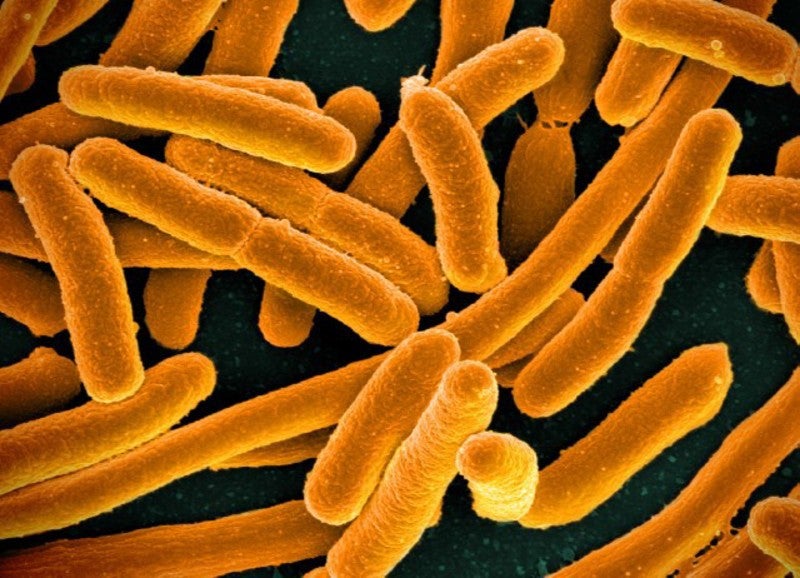
Research teams from the University of Sheffield and Rutherford Appleton Laboratory (RAL) in the UK have developed a compound that could kill antibiotic-resistant superbugs.
Antimicrobial resistance is known to cause 25,000 deaths in the EU each year, which is expected to rise to more than ten million worldwide by 2050. This latest research offers hope for a potential treatment.
Go deeper with GlobalData

Discover B2B Marketing That Performs
Combine business intelligence and editorial excellence to reach engaged professionals across 36 leading media platforms.
The University of Sheffield chemistry department professor Jim Thomas said: “As the compound is luminescent, it glows when exposed to light. This means the uptake and effect on bacteria can be followed by the advanced microscope techniques available at RAL.
“This breakthrough could lead to vital new treatments to life-threatening superbugs and the growing risk posed by antimicrobial resistance.”
When tested in antibiotic-resistant, gram-negative bacteria, the compound demonstrated the ability to kill microorganisms.
Gram-negative bacteria such as Escherichia coli (E. coli) cause a variety of infections, including pneumonia. They are considered difficult-to-treat as their cell wall prevents drugs from entering the microbe.
The researchers noted that a therapeutic for these bacteria has not been launched in the last 50 years, and no potential candidates have entered clinical trials since 2010.
During studies conducted at the University of Sheffield and RAL, the new compound was observed to have multiple modes of action. This capability is expected to make it more difficult for bacteria to develop resistance.
Findings from the research have been published in the ACS Nano journal. The team intends to further assess the compound in other multi-resistant superbugs.
In January this year, the UK Government announced a plan to tackle antimicrobial resistance (AMR) in the country by 2040, with an aim to cut down antibiotics use by 15% over the next five years.


