
The pharmaceutical industry has widely criticised the US administration’s decision to impose a 100% tariff on branded drugs imported into the country, as trade bodies and analysts begin to dissect the economic consequences of the latest blanket levies.
On 2 April, President Donald Trump announced a 100% tariff on patented pharmaceutical products and ingredients. The tariffs, imposed under section 232, will come into effect 120 days after the order for certain large companies, and 180 days for smaller companies. The tariff is an answer to the US administration’s stance that the country is over-reliant on pharmaceutical imports, which, according to Secretary of Commerce Howard Lutnick, threatens national security.
In a statement, John Crowley, CEO of the Biotechnology Innovation Organization (BIO), said: “The reality is that any tariffs on America’s medicines will raise costs, impede domestic manufacturing, and delay the development of new treatments – all while doing nothing to enhance our national security.”
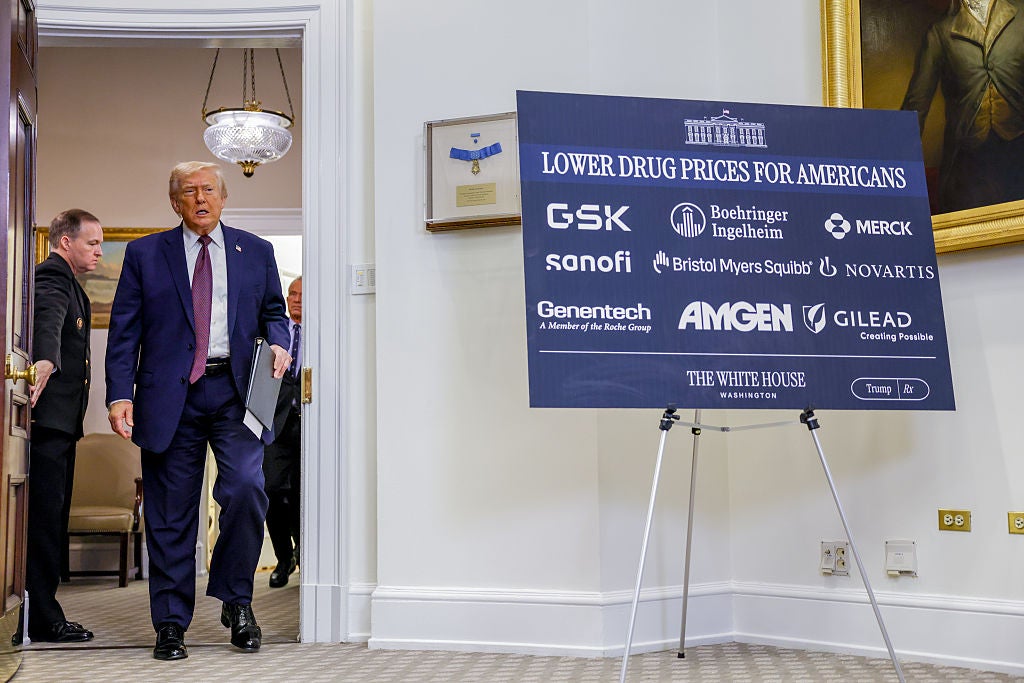
There are nuances within the wide-ranging policy. Companies that have pledged to onshore production of products will only be hit with a 20% rate – they will have four years to enact this before the tariff goes up to 100%. Pharma companies that have pricing agreements with the White House via the Most Favored Nation (MFN) framework are exempt from tariffs until 2029. There are currently 16 companies that this applies to, mostly made up of major drugmakers such as Pfizer, Eli Lilly, and MSD, amongst others. Generics and biosimilars, which constitute around 90% of American prescriptions, are not currently included in the tariff framework.
The 100% rate neither applies to branded products from the European Union (EU), Japan, Korea, Switzerland or Liechtenstein, all of which have separate trade deals with the US. The UK is also safe courtesy of its landmark zero-tariff pharma deal struck in December 2025.
In a research note, ING senior economist Diederik Stadig commented: “The key countries involved include Singapore, India, and China –none of which currently export a substantial volume of branded pharmaceuticals to the US. The economic impact will therefore be negligible. Rather, the tariff is geopolitical in nature and should be seen as a shot across the bow for more intense competition between the US and China in biotech and pharma.”
China plays into tariff’s geopolitical angle
Trump’s latest pharma-centric trade policy is therefore one avenue to shore up American medicine supply chains amid the rise of China on the global stage. Analysis by GlobalData in October 2025 stated that China was responsible for one-fifth of global drug development, while ING ascertains that, currently, one‑third of all new molecules in global pipelines now originate from the country.
Western big pharma is pouring billions of dollars into licensing deals with Chinese biotechs – a reflection of the wealth of promising early-stage drugs in the region. Trump has been attuned to the economic consequences of this investment shift. In January 2026, following Congress approval a month earlier, he enacted the BIOSECURE Act, preventing some Chinese biotechs and manufacturers from accessing US funding and collaborating with domestic pharma companies using federal funds.
Stadig added: “We believe that the next Pfizer will be Chinese rather than American or European. US policymakers on both sides of the aisle have realised that China is a real threat to US dominance in biopharmaceutical innovation.”
China’s pipeline output has added to a perspective in Washington that the American medicine supply chain is too susceptible to pressures. According to the US Food and Drug Administration (FDA), around 53% of patented pharmaceutical products distributed in the US are produced outside the country. In a statement, Trump said that life-saving medications could be limited in the event of global supply chain disruption due to geopolitical or economic disruption. Supply chains are currently under heightened focus due to the ongoing conflict in the Middle East, disrupting global trade routes.
However, pharma trade bodies have been unanimous in their view that tariffs are neither the answer to enhance security nor an effective strategy to boost competitiveness in the US.
Crowley said: “Tariffs divert scarce resources away from research and development, weaken American biotech against China’s rising industry, and ultimately, harm the health and economic well-being of Americans.”
Stephen Ublwe, CEO of The Pharmaceutical Research and Manufacturers of America (PhRMA), stated: “We need smart policies to ensure that the US remains the best place in the world to discover and manufacture affordable, lifesaving medicines. Tariffs will undermine this important goal.”