As the pharmaceutical industry progresses further into the age of personalised medicine, next-generation, targeted and disease-modifying biologics are becoming increasingly commonplace across all major disease subcategories.
Alongside the shift to advanced therapies, companies are now looking to develop drugs with patient centricity in mind – putting a patient’s comfort and quality of life (QoL) at the forethought of the development process.
This trend has prompted companies to move away from intravenous (IV) formulations in favour of subcutaneous (SC) versions of flagship therapies, which can reduce the time of treatment administration for patients. In some cases, medication can also be taken at home – reducing both travel burden on patients and resource challenges on overstretched global healthcare systems.
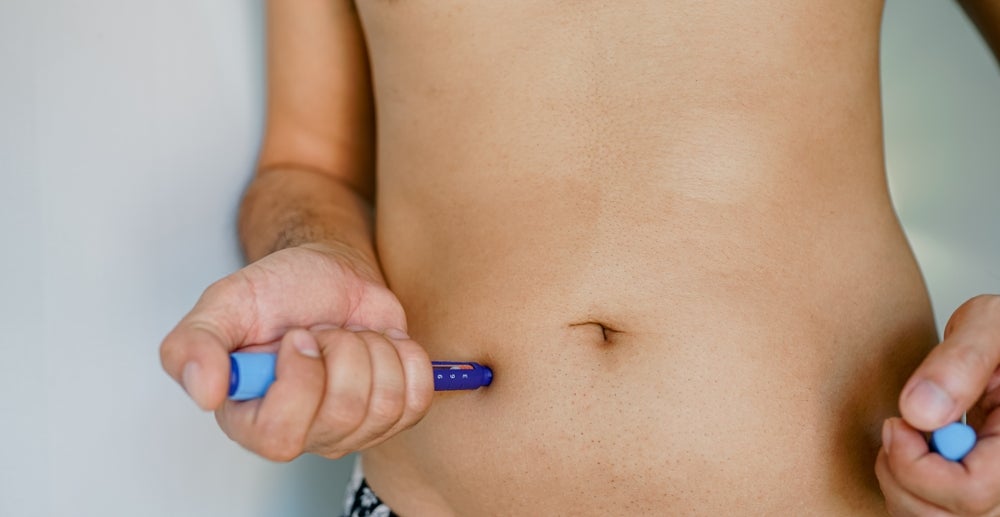
According to Tony Bedford, director of Front-End Innovation at drug delivery specialist Phillips Medisize, the industry will continue to see a move towards high-dose SC administration of biologics, with a focus on device based approaches capable of supporting larger volumes, such as advancements in prefilled syringes and autoinjectors.
Note: This interview has been edited for length and clarity.
Annabel Kartal-Allen (AKA): Could you talk me through the current trends in drug delivery – specifically around the use of SC delivery?
Tony Bedford (TB): There is definitely a trend towards SC administration, which has been ongoing for some time. Of the top 10 selling drugs, eight are in a SC format; that in itself tells a story. The move towards SC reflects a combination of IV reformulation programmes and therapies that are designed for SC administration from the outset.
AKA: Why has the industry seen an increase in the prevalence of high-dose and large-volume injectables?
TB: The main driver is coming from pharma, but the advantage spreads to patients and healthcare professionals (HCPs) as well. It benefits pharma from a life cycle management perspective, as creating new, high-dose formulations of best-selling drugs can help extend the life of a drug’s market exclusivity. High-dose SC formulations can also introduce therapies into different clinical settings, which can help to boost a therapy’s uptake across the market it operates in.
High-dose formulations also benefit patients and HCPs, as they can allow these therapies to be safely administered in an outpatient facility, which is much faster and cheaper than the clinical care setting. This reduces ‘bed blocking’ for healthcare services, while reducing the patient’s reliance on extended hospital visits often associated with IV delivery.
However, there are some unanswered questions around payers and insurance when discussing SC biologics – primarily stemming from where and how these drugs get covered.

AKA: Can you talk me through the current most common practices for high-dose SC administration?
TB: We commonly see, for example, large volume SC models, with doses between 9-23ml given through a butterfly-type syringe into the SC tissue.
To ensure that the SC tissue accepts the drug coming in, companies are using hyaluronidase as a permeation enhancer, which may help the SC tissue accommodate larger volumes and potentially shorten administration time.
We’re also seeing increased use of prefilled syringes and autoinjectors, with autoinjector-based delivery currently limited to lower volumes, and larger-volume formats under development, as it’s questionable if a higher volume will be successfully delivered through this method. These formulations often include hyaluronidase, as it’s suitable for that kind of delivery vehicle. Mechanised devices – either electromechanical or mechanical – are also used. These can be either an on-body device like a patch pump, or a near-body device, which is connected to the patient via a cannula.
Most of these types are best suited to chronic care scenarios, meaning patients are needing consistent treatment over a mid- or long-term basis.
AKA: Will the rise of SC therapies have any unforeseen impacts on HCPs?
TB: Large volume SC models that are administered via manual push can take a prolonged period of effort to administer, which may be uncomfortable for the person giving the treatment – especially if the drug is of a high viscosity.
While there isn’t currently any data on this impact, we do hear that HCPs are dealing with discomfort or pain when administering these SC drugs – though it’s generally more common for developers to consider comfort for the patient rather than pain on the HCP side.
However, companies are exploring ways to prevent this on the formulation side with permeation enhancers like hyaluronidase. Alternatively, the volume of the drug can be increased to reduce the dose’s concentration – though there can be a trade-off between the two.
We can also employ thin-wall needles and slow the rate of infusion, which makes it a little easier.
AKA: Are there any delivery approaches you believe are currently championing the shift from IV to SC?
TB: I’d like to say it’s on-body, but right now I think it’s a combination of on-body and near-body. When we saw the first on-body injector (OBI) launch in 2016, we all thought the floodgates would open and there would be a bunch of different formulations delivered through OBI, and that hasn’t happened.
It’s important to note that, when making the switch from IV to SC, there are plenty of tools at our disposal that can help achieve this goal, with a dozen or so delivery devices already gaining approval. The technology is out there, so now pharma companies just have to find the right device to successfully and safely administer their drug.
AKA: What are your predictions for the future of high-dose SC drug delivery?
TB: I think manual push syringes will definitely be used moving forward. In this format, I don’t think we will see anything much larger than 23ml, but we will likely see new drugs come in at up to 15ml. We’ll also see a continued increase in larger volume autoinjectors dispensing 2-5ml. Both autoinjectors and prefilled syringes will see a rise, which will be facilitated by higher levels of hyaluronidase or an equivalent permeation enhancer.
We may also finally see uptake of on-body patch pumps, though autoinjectors may be chosen over these solutions for doses up to 5ml.
I imagine there will be an increase in near-body delivery over the next few years, which can be anything from 5ml upwards for SC formulations. The growth of large-volume subcutaneous formulations in development over the last 18 months has been enormous already, so I don’t see why that wouldn’t continue.
I’d also hope to see further strides to make more oncology drugs SC, which has proven more challenging than in some other disease areas due to their high toxicity. By introducing these types of formulations, it would make it easier for both the patient and physician, as some treatment may not need to be conducted in the critical care scenario. We’ve got near and on-body injectors, as well as autoinjectors and prefilled syringes to achieve this goal, but more work must be done to implement these types of formulations on a broader scale.
Editor's note: This article was updated on 27 January with clarifications to ensure technical accuracy.