
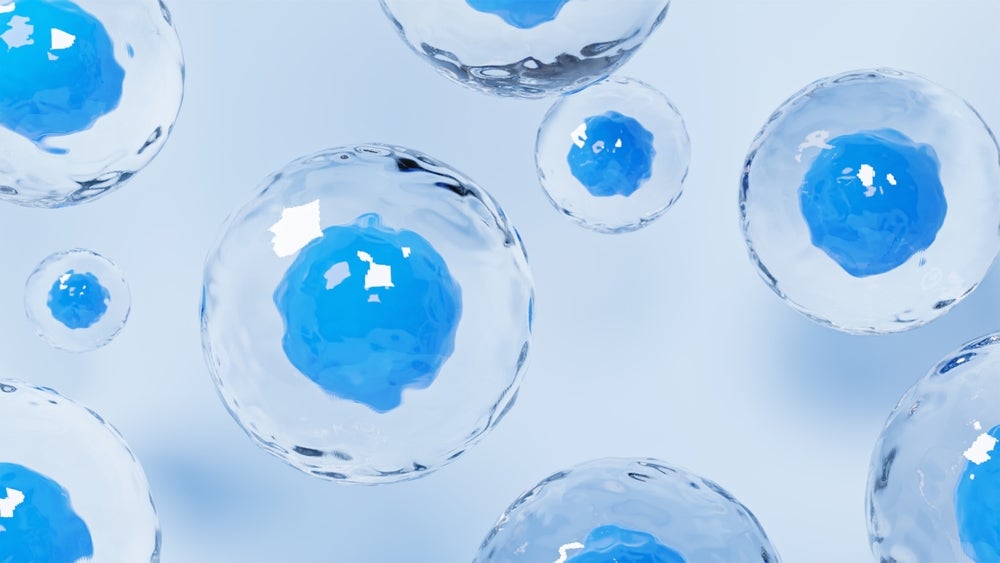
Quintessence Biotech has launched a bio-separation tool to reduce the manufacturing bottleneck suffered by cell and gene therapies (CGTs), creating the first “living” artificial cell.
DACS is a biomimetic lipid particle-based technology that has multiple features of a living cell, Quintessence’s CEO, Charles Cavaniol, tells Pharmaceutical Technology. This includes its size and deformability, as well as its membrane and antigen-presenting properties.
This plug-and-play technology, which Quintessence has called DACS, is designed to address the manufacturing bottlenecks associated with the bio-separation process of CGTs at the laboratory and commercial scales.
These artificial cells facilitate bio-separation through a flotation-based method, which relies on gravity to separate therapeutic cells from the mixture in which they are grown. This reduces the number of manual steps involved in the process.
By employing an artificial cell with antigen-presenting characteristics, Quintessence aims to recreate a manufacturing environment close to natural biology, allowing the controlled activation of therapeutic cells during bio-separation.
According to Cavaniol, DACS is the product of more than two decades of academic research and is designed to be “plug-and-play”, meaning it can be integrated into any cell culture hardware. He adds that this could reduce a manufacturer’s need to adhere to rigid production models while reducing the cost of such a process.
He explains that the technology is suitable for the manufacture of any type of cell therapy, whether that be autologous or allogeneic and does not require changes in infrastructure during the scaling process. Quintessence has said it will reduce the cost of a cell therapy dose by up to 60%.
Offering an alternative to magnetic beads in bio-separation
When performing bio-separation, a key step of the CGT manufacturing process, drugmakers often use magnetic beads, which are designed to bind and separate these therapeutic cells from a mixture through interaction with an external magnet.
While this method can be effective, there are multiple challenges associated with its use, including issues around scalability, the potential impact of the magnetic beads on cell viability and difficulties around removing these beads from the final product.
Cavaniol notes that a magnetic bead-based approach also requires a specific instrument dedicated to this step, which can be difficult to integrate into a bioreactor.
DACS is designed to overcome these issues by reducing the number of steps and reliance on specialised equipment within the bio-separation process, while also eliminating the need for manufacturers to lock in on the initial use of a certain type of manufacturing hardware.
As the tool mimics the cell-cell interactions naturally seen in the body, Cavaniol says that DACS can enhance the functionality of a therapeutic cell product, which can reduce the risk of side effects in patients receiving these cells.
Quintessence's technology is currently in beta testing, and Cavaniol notes that two therapies using DACS within the manufacturing process are expected to reach the clinic within the next two years.