

The Applied Gene and Cell Therapy Centre (AGCTC) in Sharonville, Ohio, US, was developed by Cincinnati Children’s Hospital Medical Centre (CCHMC), a non-profit paediatric health system.
Opened in November 2025, the new facility was developed with an investment of $60m by renovating an existing building to produce gene, cell and immunotherapy products for clinical trials.
Recommended Buyers Guides

The Cincinnati Children’s Cellular Manipulations Lab and Vector Production Facility, earlier situated on the main campus of the CCHMC in Cincinnati, Ohio, was transferred to the new facility.
The centre, which can house approximately 100 employees, advances Cincinnati Children’s research capabilities while accelerating therapies by strengthening collaboration with partners such as large pharmaceutical companies, biotech operators, universities and other health systems.
The facility is set to enter a certification programme lasting around 12 months, aimed at confirming that the site complies with standards for producing gene, cell and immunotherapy products for use in clinical trials.
The on-site manufacture of gene, cell and immunotherapy therapies is expected to start by early 2027.
Location
The new facility is housed in an existing building located at 10995 Canal Road in Sharonville, a suburb situated approximately 15 miles (24.14km) north of Cincinnati.
Developed on a 14.6-acre (5.9-hectare) site, the building previously housed an auto parts distribution facility.
AGCTC details
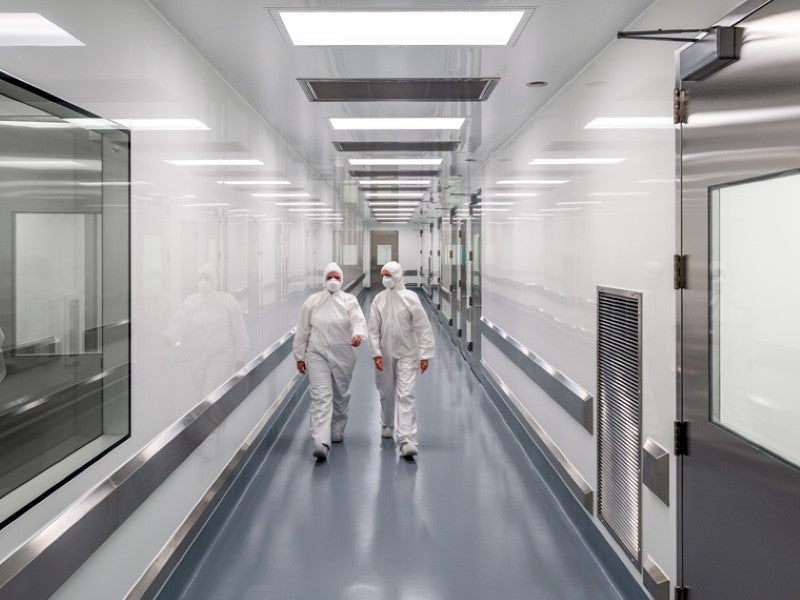
The AGCTC, spanning more than 50,000ft2 (4,645m2), is housed within a 111,000ft2 building, which was renovated to meet current good manufacturing practice (cGMP) standards for the production of gene and cell therapy products.
A portion of the building is designated as a distribution hub for the supply chain serving the CCHMC’s three hospitals and 40 other sites.
The facility features advanced manufacturing capabilities, testing laboratories, office spaces and warehouse facilities in a well-designed configuration that supports a streamlined, safe flow of products and allows for future expansion. It functions as both a laboratory and an advanced manufacturing site.
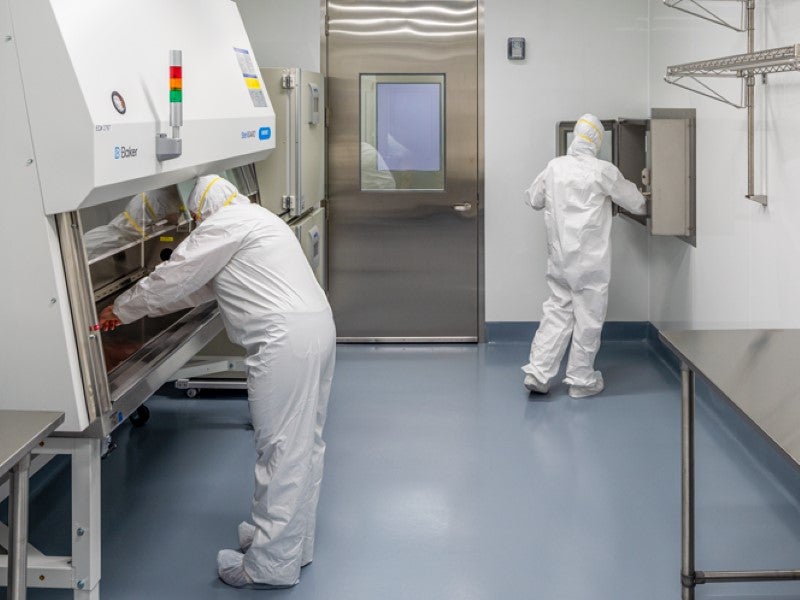
It is equipped with five ISO 7 cGMP cleanrooms for viral vector production and seven ISO 7 cGMP suites for cell therapy, along with 10,000ft2 dedicated to quality control and research and development laboratories.
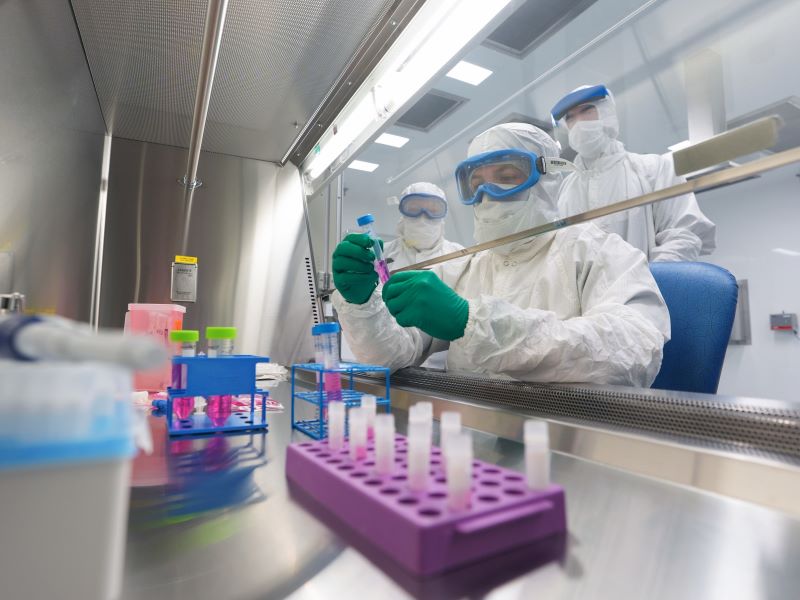
The laboratory spaces comprise organoid suites, cell culture areas, product design and polymerase chain reaction rooms, alongside analytical and microbiology laboratories.
In addition, the centre includes a range of ancillary facilities such as autoclave areas, biowaste handling space, cryogenic storage, dedicated quarantine rooms, metrology provision, temperature-controlled warehousing and a walk-in cold room.
The centre is also equipped with advanced air filtration systems and precise temperature and humidity controls, which are critical for ensuring the therapies can be manufactured safely and reliably.
Research and manufacturing activities at the AGCTC
The AGCTC’s focus on gene and cell therapy is driven by the pressing global need to carry out clinical trials for innovative medicinal and biological therapies aimed at treating patients with cancer, blood disorders and genetic diseases.
The centre develops viral vectors and cell-based therapies for conditions including telomere biology disorders, genetic diseases caused by mutations that may trigger early ageing, organ impairment and an increased risk of malignancies such as leukaemia.
The centre is also advancing approaches for haematological disorders such as sickle cell disease, which can lead to intense pain episodes and progressive organ damage. Separately, it is pursuing new treatments for hereditary protein alveolar proteinosis, a rare lung condition associated with breathlessness, persistent cough and tiredness.
The facility is expected to advance paediatric research and child health outcomes, as globally more than 300,000 children are diagnosed with cancer annually, and an estimated eight million are born with congenital anomalies.
The new facility builds upon the success of the CCHMC’s Translational Core Laboratory, a pioneering entity in the development, testing and manufacturing of advanced drugs and therapeutics for early-phase clinical trials over the past 15 years.
In March 2026, Tempest Therapeutics selected the centre as its development and manufacturing partner.
The AGCTC will take forward the technology transfer and manufacturing activities for Tempest Therapeutics’ TPST-2003, an investigational dual‑target CAR‑T candidate.
Under the terms of the agreement, the AGCTC will manage the technology transfer and deliver an investigational new drug enabling production, supporting Tempest’s preparations for a planned US registrational trial targeted for late 2026.
Contractors involved
Danis Construction Building, a construction company, was appointed as the design-builder for the AGCTC.
BHDP Architecture, an architectural company, was responsible for providing architecture and interior design services.
Heapy Engineering, an engineering company, was contracted to deliver mechanical engineering and plumbing services.
Schaefer, a structural engineering services provider, delivered structural engineering services.
bioX, a process engineering, analytical testing and process development services provider, was responsible for providing process and design engineering.
Marketing commentary on Cincinnati Children’s Hospital
The CCHMC is a non-profit organisation renowned for its comprehensive paediatric healthcare services.
The institution is exploring innovative approaches to healthcare, particularly in areas such as gene and cell therapy, proton therapy and bioinformatics.
The CCHMC is also actively addressing social determinants of health to reduce the infant mortality rate. Approximately one-third of the health system’s 18,500 employees are involved in research activities.
Furthermore, Cincinnati Children’s is among the top two recipients of paediatric research grants awarded by the National Institutes of Health.
Previously, in September 2023, the CCHMC launched the first-of-its-kind Advanced Leukemia Therapies and Research Centre to advance research and clinical programmes for the development of new cures for blood cancers.
