
Tau Uncovered: Driving the Next Generation of Alzheimer’s Diagnosis and Treatment

In Alzheimer’s disease and other tauopathies, abnormal post‑translational modifications, misfolding, and aggregation of Tau drive microtubule destabilisation, synaptic dysfunction, neuronal loss, and the network‑wide spread of pathology, establishing Tau as a key target for biomarkers and disease‑modifying therapies.

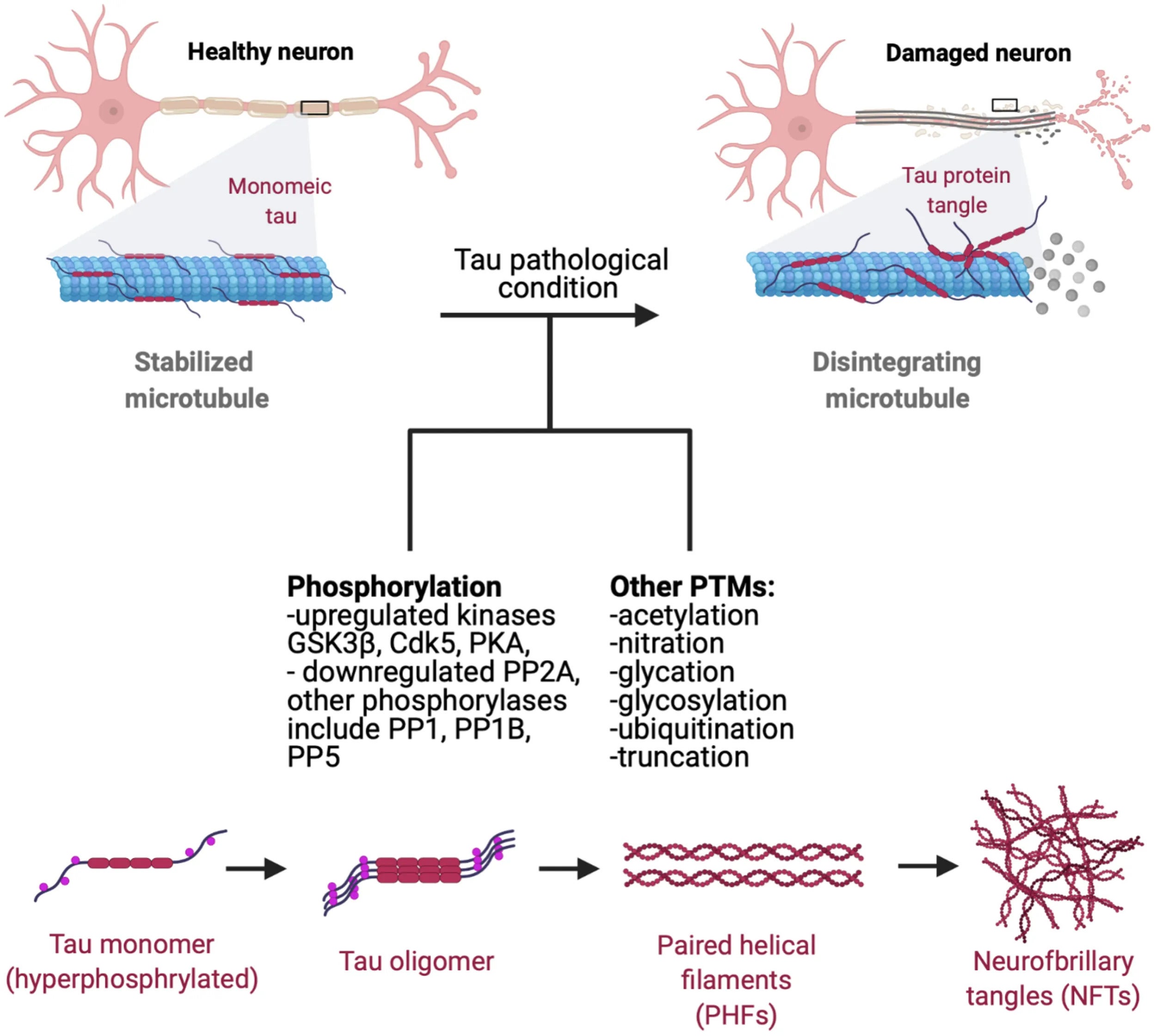
Figure 1. Progression of tau pathology (Image from https://www.frontiersin.org/journals/neuroscience/articles/10.3389/fnins.2021.702788/full).
SignalChem Biotech, now part of Sino Biological, offers a Tau portfolio of over 80 products, spanning diverse isoforms, truncations, mutations, and in vivo kinase‑phosphorylated variants. The phospho‑Tau proteins capture key neurodegenerative signatures, supporting IVD antibody development and mechanism‑of‑action studies. Biotinylated Tau enables efficient capture on streptavidin platforms for screening and binding assays.
Targeted diagnostic strategies for Tau
Although the demand for Alzheimer’s disease (AD) diagnosis grows, early AD remains challenging to detect, while gold-standard approaches such as Aβ PET imaging and cerebrospinal fluid (CSF) testing are often invasive, costly, and limited in accessibility. As a result, diagnostic strategies are evolving toward stepwise workflows that leverage blood-based biomarkers for initial screening and risk stratification. Within this framework, plasma phosphorylated Tau biomarkers (pTau181 and pTau217) have emerged as critical bridges between early risk assessment and confirmatory diagnosis.
Elecsys® pTau181, developed by Roche Diagnostics, is the first FDA-approved plasma p-Tau test for assessing Alzheimer’s disease–related amyloid pathology in primary care. The SPEAR UltraDetect™ pTau217 assay is an ultra-sensitive, blood-based immunoassay that quantifies plasma pTau217 using dual-verification SPEAR™ chemistry, achieving fg/mL sensitivity and >90% specificity for amyloid-PET positivity in comparative studies. Currently, for research use, it supports AD clinical trials, cohort enrichment, and longitudinal biomarker studies, and has received FDA Breakthrough Device Designation for future clinical application.
Advances in the development of Tau-targeted therapeutic drugs
Current Tau-targeted strategies span emerging approaches targeting Tau-triggered neuroinflammatory pathways, modulation of Tau phosphorylation via kinases and phosphatases, inhibition of aggregation and PHF/NFT formation using antibodies or small molecules, active and passive immunotherapies, and gene-level reduction of MAPT expression.
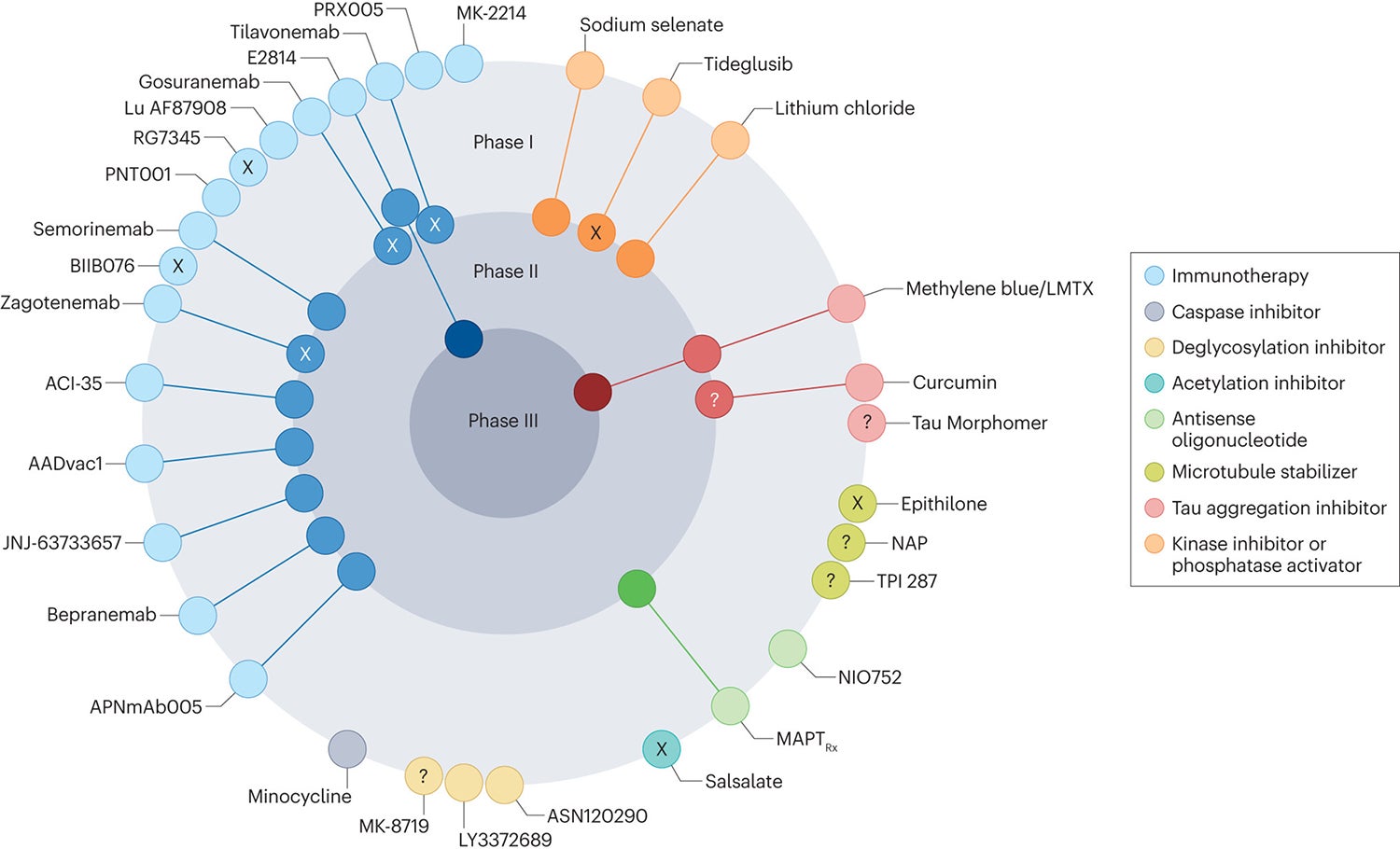
Figure 2. Current status of clinical trials of tau-targeting drugs (Image from https://pmc.ncbi.nlm.nih.gov/articles/PMC10965012/).
In studies targeting Tau-driven neuroinflammatory pathways, Jin et al. demonstrated that exogenous Tau activates microglia via the PQBP1–cGAS–STING innate immune signalling axis. Using recombinant human Tau 410 (3R) and Tau 441 (4R) proteins (T06-54N, T08-54N; SignalChem), SPR and NMR analyses showed that monomeric Tau binds the WW domain of PQBP1 through its proline-rich region, while P179A/P216A mutations markedly weaken this interaction. Following microglial uptake, Tau–PQBP1 colocalization recruits cGAS and STING, leading to NF-κB activation and the expression of inflammatory factors.
The GSK-3β inhibitor Tideglusib demonstrated functional irreversible inhibition and reduced Tau phosphorylation and pathology in multiple AD mouse models, supporting GSK-3β as an important Tau kinase target and motivating the development of next-generation GSK-3 inhibitors, including AZD1080 and lithium-based compounds.
Blocking Tau aggregation is another major focus of Tau-targeted therapies, aiming to neutralise pathological Tau and prevent its propagation. Etalanetug (E2814), a humanised IgG1 antibody developed by Eisai, targets the Tau microtubule-binding repeat region (MTBR). Preclinical studies show that E2814 inhibits Tau seeding and spread, while early clinical studies in DIAD patients demonstrate good safety and biomarker responses, supporting its translational potential as a disease-modifying immunotherapy.
Active Tau immunotherapy aims to induce endogenous anti-Tau antibodies that neutralise pathological Tau, inhibit aggregation and spread, and have the potential to modify the disease long term. AADvac1, one of the first Tau vaccines to enter clinical development, targets an MTBR conformational epitope and has demonstrated favourable safety, robust immunogenicity, and reduced Tau pathology in preclinical and early clinical studies.
As Tau-targeted diagnostics and therapies continue to mature, they are poised to play a pivotal role in enabling earlier detection, more precise patient stratification, and impactful interventions for Alzheimer’s disease and related tauopathies.
Featured Products
More Tau Proteins
| Cat# | Description | Species | Sequence | Expression Host |
| T07-50CN | Tau-412, GSK3beta-phosphorylated | Human | Full Length | E. coli |
| T08-50BN | Tau-441, BRSK2-phosphorylated | Human | Full Length | E. coli |
| T08-50CN | Tau-441, CAMK2-phosphorylated | Human | Full Length | E. coli |
| T08-50FN | Tau-441, GSK3beta-phosphorylated | Human | Full Length | E. coli |
| T08-50KN | Tau-441, PHKG2-phosphorylated | Human | Full Length | E. coli |
| T08-50LN | Tau-441, PKA-phosphorylated | Human | Full Length | E. coli |
| T08-50N | Tau-441, BRSK1-phosphorylated | Human | Full Length | E. coli |
| T08-50ON | Tau-441, TTBK1-phosphorylated | Human | Full Length | E. coli |
| T08-50RN | Tau-441, DYRK1A-phosphorylated | Human | Full Length | E. coli |
| T08-50RNB | Tau-441, DYRK1A-phosphorylated & Biotinylated | Human | Full Length | E. coli |
| T08-54B2N | Tau-441, Biotinylated | Human | Full Length | E. coli |
| T08-54BN | Tau-441, Biotinylated | Human | Full Length | E. coli |
| T08-55LNB | Tau-441 (216-391), Biotinylated | Human | 216-391 | E. coli |
| T08-55NB | Tau-441 (244-372), Biotinylated | Human | 244-372 | E. coli |
| T08-56FBN | Tau-441 (P301L), Biotinylated | Human | Full Length, P301L | E. coli |
| T08-55LCB | Tau-441 (216-391), Biotinylated | Human | 216-391 | E. coli |
| T04-54BN | Tau-381, Biotinylated | Human | 1-381 | E. coli |
| T07-54BH | Tau-412, Biotinylated | Human | 1-412 | E. coli |
| T06-54BN | Tau-410, Biotinylated | Human | 1-410 | E. coli |
| T08-56GNB | Tau-441 (P301S), Biotinylated | Human | 1-441 | E. coli |
| T08-55FNB | Tau-441 (151-391), Biotinylated | Human | 151-391 | E. coli |
| T08-55BNB | Tau-441 (1-421), Biotinylated | Human | 1-421 | E. coli |
| T08-52NB | Tau-441 (dK280), Biotinylated | Human | 1-441 | E. coli |
| T08-55HNB | Tau-441 (231-421), Biotinylated | Human | 231-421 | E. coli |
| T06-54B2N | Tau-410, Biotinylated | Human | 1-410 | E. coli |
| T08-50FNB | Tau-441, GSK3beta-phosphorylated, biotinylated | Human | Full Length | E. coli |
| T08-50LNB | Tau-441, PKA-phosphorylated, biotinylated | Human | Full Length | E. coli |
| T08-50NB | Tau-441, BRSK1-phosphorylated, biotinylated | Human | Full Length | E. coli |
| T08-50ONB | Tau-441, TTBK1-phosphorylated, biotinylated | Human | Full Length | E. coli |
For more information, please visit this page.