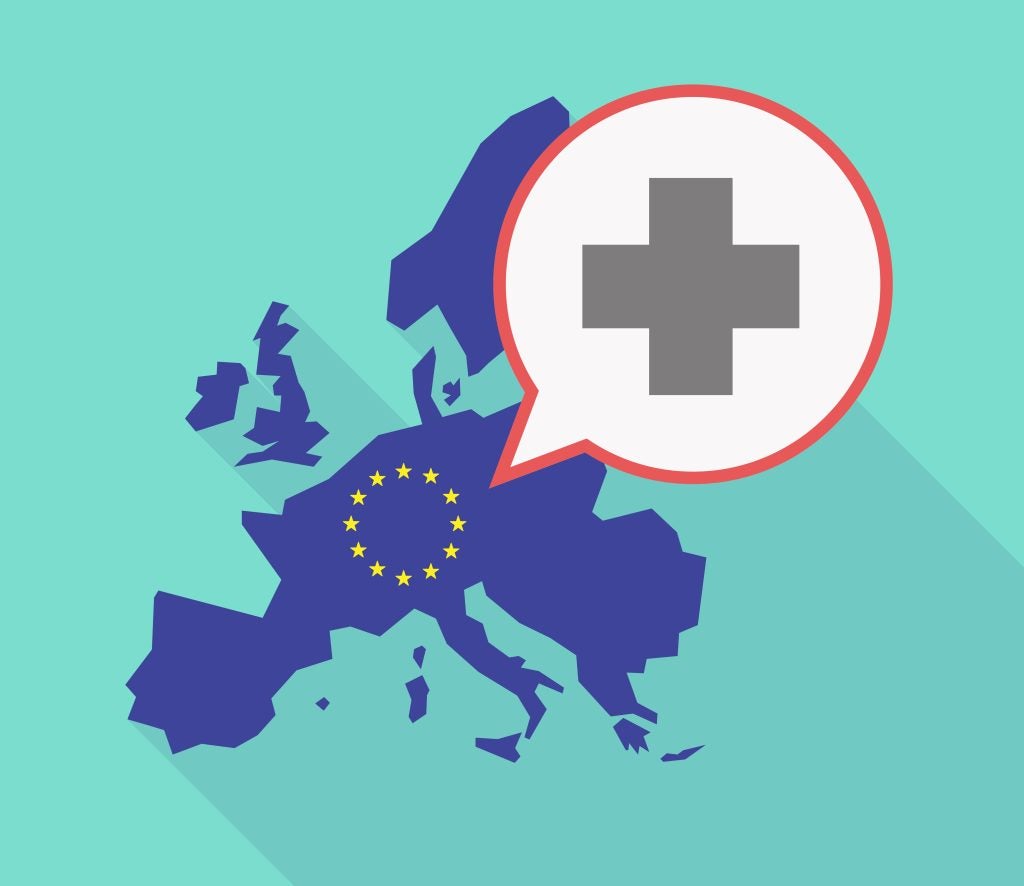
As healthcare players from Europe and further afield continue to produce potentially game-changing healthcare innovations, attendees at HLTH Europe 2026 turned their attention to how these technologies, pharmaceutical products and medical devices can best fit into Europe’s healthcare ecosystem.
At the conference, which was held in Amsterdam from 15-18 June, there was a buzz of excitement around technologies with paradigm-shifting potential, though this enthusiasm was hampered by a looming truth - a beneficial product’s market debut doesn’t mean it is being effectively implemented and embedded into European healthcare systems.
With this principle in mind, speakers and attendees alike were keen to discuss the best ways to bridge the innovation-to-implementation gap, with focus sharpening on key drivers like artificial intelligence (AI) and digital technologies against the backdrop of healthcare’s increasing ‘consumerisation’.
Healthcare implementation lags despite innovation surge
During HLTH Europe 2026, one of the key themes that dominated discourse was not the lack of technological advancements or innovation, which experts say are bountifully present across healthcare, but the lagging and fragmented implementation of these tools across European healthcare services.
This is noticeably true in the obesity space, argued panellists, as only 2-3% of eligible European patients are treated with glucagon-like peptide 1 receptor agonists (GLP-1RAs) compared with 10% in the US, as per Novo Nordisk’s SVP Region Europe and Canada, Vince Lamanna.
Alongside the accessibility challenges around these drugs, experts note their slow uptake is also exacerbated by the looming stigmas held by the public and the healthcare systems alike.
Earim Chaudry, CMO of online weight-loss clinic Voy, backed this take with some data the company obtained, which revealed that 55% of patients on weight loss medications are hiding this fact from their partners. Similarly, the German government still considers obesity a lifestyle choice by law, and obesity is currently not a core part of medical education – potentially contributing to the worsening of the stigma around treatment and widening knowledge gaps for both healthcare providers and end users.
To overcome these challenges, speakers stressed the importance of educational programmes and aiming for systemic change. With this comes an opportunity, noted Scott Honken, CCO of Weight Watchers, as Europe’s public integrated systems “hold the value of combining medication and complementary care as you think about coverage.”
Janus Hoeks, co-founder of patient adherence health technology, PicoCare, also voiced similar concerns in a conversation with Pharmaceutical Technology, as he asserts that there is no lack of innovation within the healthcare space, but there are issues around the uptake of such tools by healthcare systems. Moving forward, Hoeks hopes that healthcare systems will focus on early implementation of useful tools to reduce the burden on overstretched systems.
The ‘consumerisation’ of healthcare
While players in the healthcare sector may hold vastly different goals in their day-to-day work, they can all unite their thinking under one key principle: how can we benefit patients in the changing times?
This question came up repeatedly at HLTH Europe 2026, as companies across the healthcare landscape all search for ways to tailor their approach in the rapidly evolving landscape. According to Marta Nowotarska, director of consumer engagement at Novo Nordisk, the patient healthcare experience is experiencing a swift evolution towards the ‘consumerisation’ of health – a phenomenon she notes is linked to an explosion of information available to the general public, which is now often sought through unconventional sources like social media or large language models (LLMs) such as ChatGPT.
Parallel to the trend towards health autonomy, some are growing sceptical of traditional healthcare, leading to a surge in patients taking decisions into their own hands, with some even seeking treatment with unregulated, unproven drugs like peptides over conventional therapeutic approaches.
Amid this shift in patient mindset, Meadhbha Monaghan, chief executive of the Patient Client Council (PCC) NI, explained that pharma’s capacity to nurture trust with the public and patients, as well as clinical colleagues, policy makers and service providers, is more important than ever. “We need to be very intentional about how we build that trust at the individual and collective levels; it won’t matter what innovations we have if we don’t focus carefully on that,” she iterated.
Nowotarska added that this change will require the pharma sector to form close partnerships with payers, patient advocacy groups and healthcare systems, which will all help the industry navigate the shifting regulatory landscape in a way that benefits the patient best, as regulations struggle to keep up with the rapid health consumerisation shift.
Alex Condoleon, chief medical affairs officer, medical impact at Pfizer, echoed these sentiments in a separate panel, noting that, if this trust is broken, pharma will “really struggle to re-establish it”, especially when it comes to the use of AI.
Dealmaking in healthcare
As companies from all corners of the European healthcare sector seek out ways to enhance their business and impress stakeholders, many are inking deals in their respective settings to drive future growth and de-risk their future growth prospects. In Q1 2026, US pharma and life sciences deal value alone surpassed $65bn, making it the strongest quarter since the beginning of the Covid-19 pandemic in 2020 – highlighting the industry’s continued interest in striking lucrative and value-creating deals.
During a panel with key players from the pharma and technology sectors, speakers highlighted the ever-present importance of strategic dealmaking, with
Priya Agrawal, VP, health equity & partnerships at MSD, noting that the company is looking out for new deal opportunities, which she said will help to “maintain the diversity of our pipeline beyond the patent cliff of our oncology product”, referring to Keytruda (pembrolizumab). Agrawal says this a little after Keytruda’s status as the top-selling drug was recently relinquished, as Eli Lilly’s Mounjaro/Zepbound (tirzepatide) takes the helm amid strong global sales growth.
During another panel session, health technology specialists acknowledged a shift occurring in the M&A landscape, with Blue Tree Group partner, Lena Lindlar, theorising that deals will be “smarter, better prepared and more selective” moving forward. Tryggvi Thorgeirsson, CEO & co-founder of Sidekick Health, added that the general shift towards dealmaking with bigger, more mature companies is likely to continue, though he personally sees strong promise in teaming up with smaller companies and “helping them build that commercial engine and scale”.
When thinking about M&A, the panellists agreed that aligning company cultures and visions for the product, as well as a great team, a strong focus on relationship building between the acquirer and acquiree, creating technologies that can be plugged into an existing business, doing due diligence checks on a potential partner, and managing expectations during the acquisition process are all key ingredients in the recipe for M&A success.