

STERIBAC Hygienic Design Candle Filter
Why solid-liquid separation is difficult under GMP
In API, antibiotic and vaccine production, separating solids from a liquid often means opening equipment, handling wet cake manually and cleaning complex internals between batches. Each of these steps exposes operators to the product, adds contamination risk and makes cleaning validation harder. Product left at the bottom of the vessel at the end of filtration is a further source of yield loss.
How the STERIBAC® filtration cycle works
STERIBAC is a candle filter that runs the complete separation inside one closed pressure vessel:
- Filtration: The slurry enters the sealed vessel. Solids build a uniform cake on the outside of the filter elements, while the clarified filtrate flows through the medium and up through the candles.
- Heel volume filtration: The liquid left at the bottom of the vessel after the main filtration is recirculated through a dedicated nozzle and filtered in a final step, instead of being discarded.
- Washing and drying: The cake can be washed, extracted or treated in place, then dewatered by forcing gas through it.
- Discharge: A reverse gas pressure pulse expands the filter medium and releases the cake into a controlled, enclosed outlet.
The full cycle can run automatically under PLC or DCS control, without operator intervention and without breaking containment.
Hygienic design for cleaning and validation
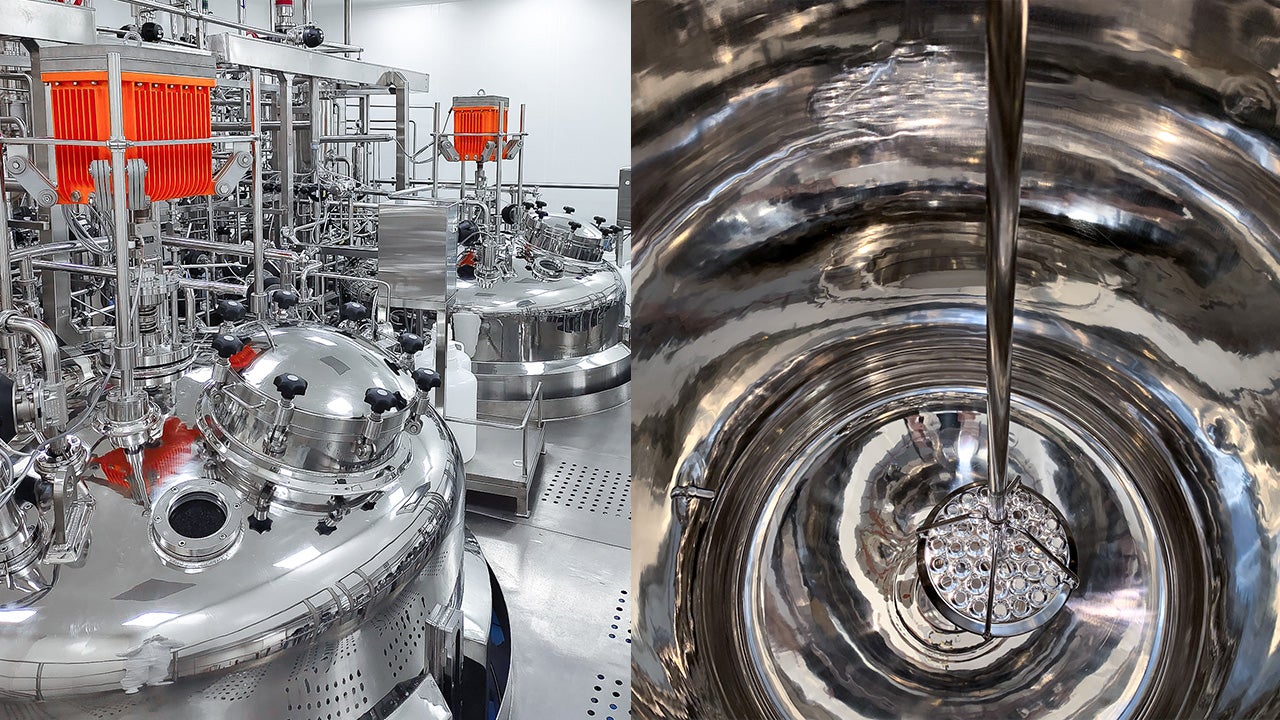
The vessel is designed for complete drainability and cleanability. Sloped surfaces, a tangential inlet, a bottom outlet and an open candle suspension minimize dead space, and rotating spray nozzles cover all product-contact surfaces during CIP and SIP. There are no rotating seals or moving parts inside the vessel.
Product-contact parts are made of 316L stainless steel, electropolished to Ra 0.4 to 0.5 µm. Interconnecting piping is sloped with low-point drains, and orbital welds are 100% endoscopically inspected. Gaskets are made of PTFE or EPDM with FDA approval, and cleaning performance is verified with a riboflavin test. Documentation includes material certificates for ferrite content and surface roughness, supporting qualification in GMP environments.
Typical applications in pharmaceutical and biotech manufacturing
STERIBAC is used for:
- filtration of crystallised APIs and removal of catalysts or activated carbon
- antibiotic API purification
- separation of biomass from fermentation broths
- yeast and cell harvesting, including recycling of live cells
- vaccine production, such as separating filter aids and proteins from the mother liquor
- separation of precipitated solids in downstream processing
- production of vitamins and X-ray contrast agents
Modular systems or fully automated skids
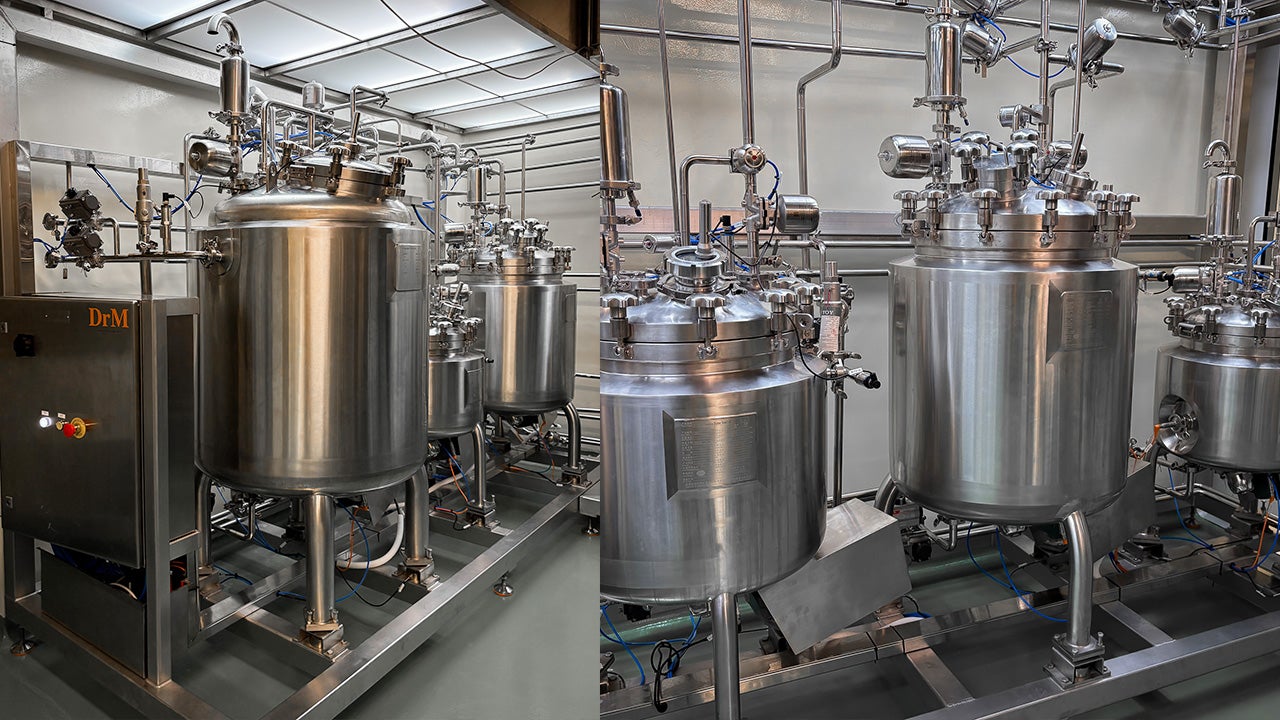
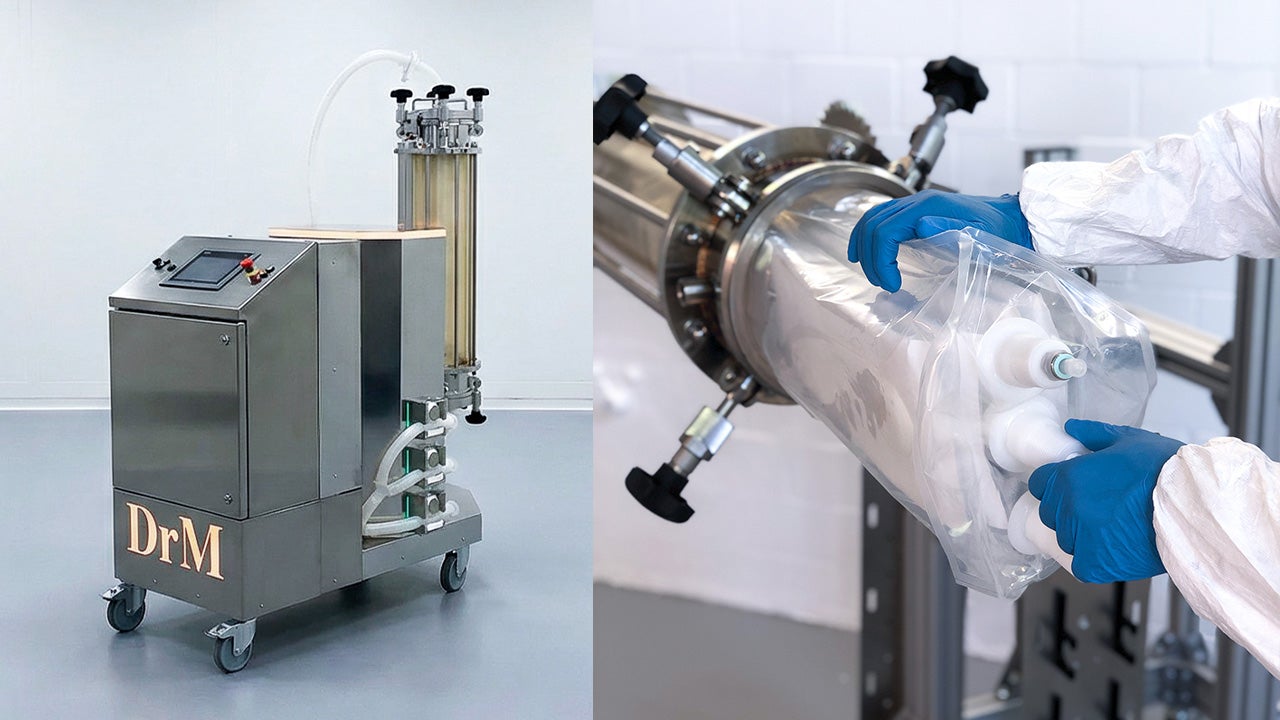
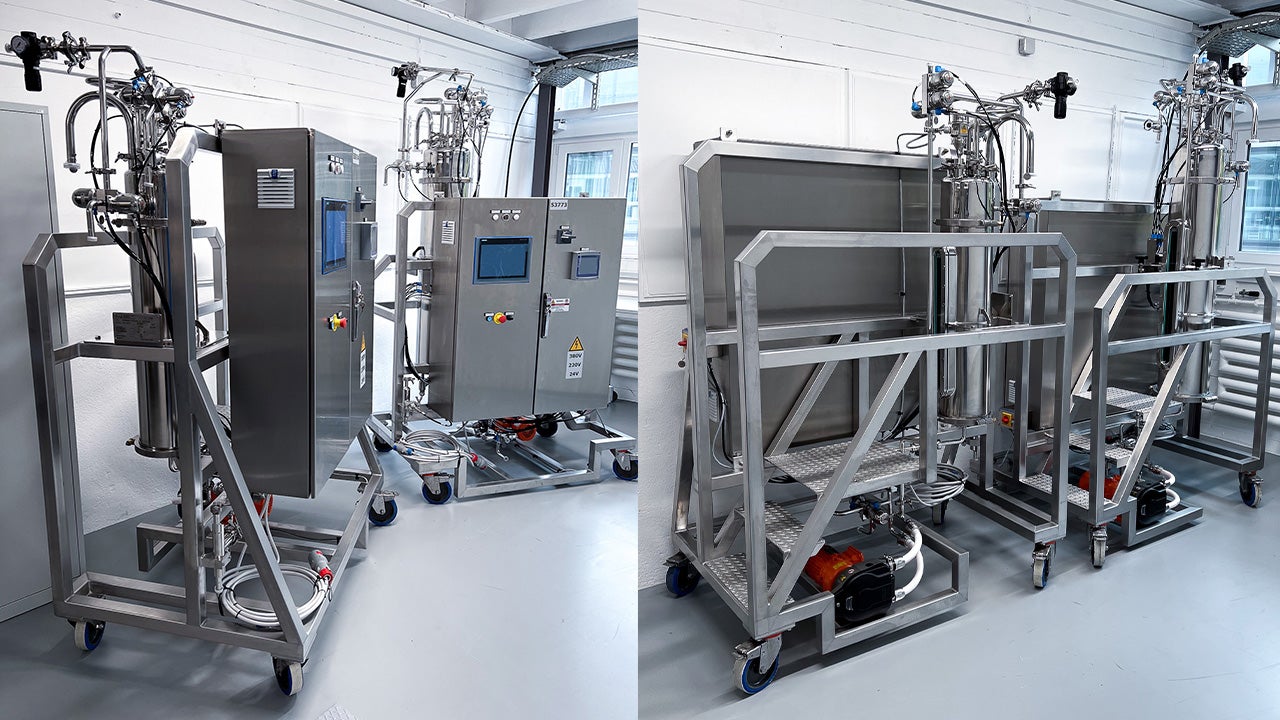
STERIBAC is supplied either as a modular filter for integration into an existing plant, or as a fully automated skid with instrumentation, valves and a control system. The modular design scales to the required filtration area and allows quick disassembly for inspection.
Test STERIBAC® in your own process
Every slurry behaves differently, so DrM recommends filtration trials with your own product, either in its test facilities or with rental units on site. Trials define the right filter medium, cycle times and washing steps before a full-scale unit is designed.
To learn more, please download the brochure. To discuss your separation step with DrM’s engineers, send an enquiry through the DrM company profile page.