
EGCG Purification from Green Tea Polyphenol Extract Using Liquid-Liquid Chromatography
This study investigated the purification of epigallocatechin gallate (EGCG), an important green-tea catechin used in dietary supplements.
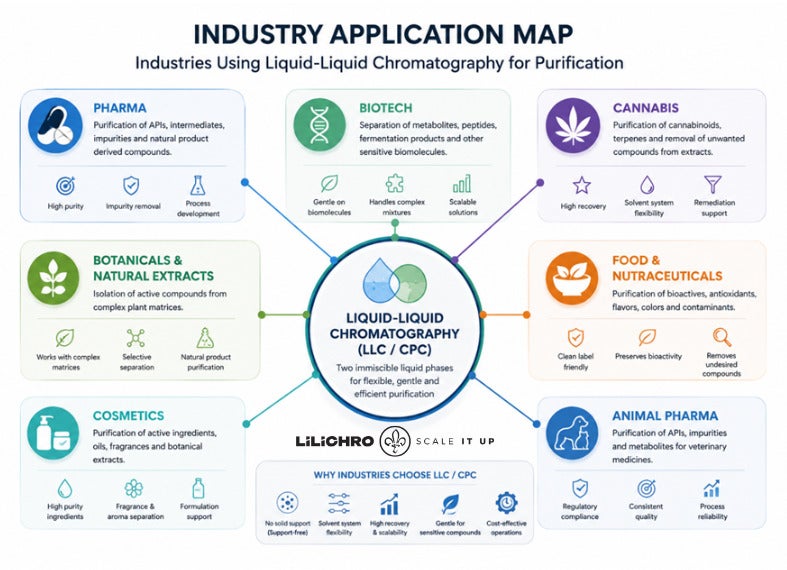
LiLiChro LLC manufactures CPC systems that deliver scalable liquid–liquid preparative chromatography for the pharmaceutical, biotechnology, natural extract and cosmetics industries.

You have successfully submitted your enquiry. Someone from our company will respond ASAP
When conventional preparative chromatography begins to limit scalability, recovery, or process robustness, alternative separation approaches become increasingly relevant.
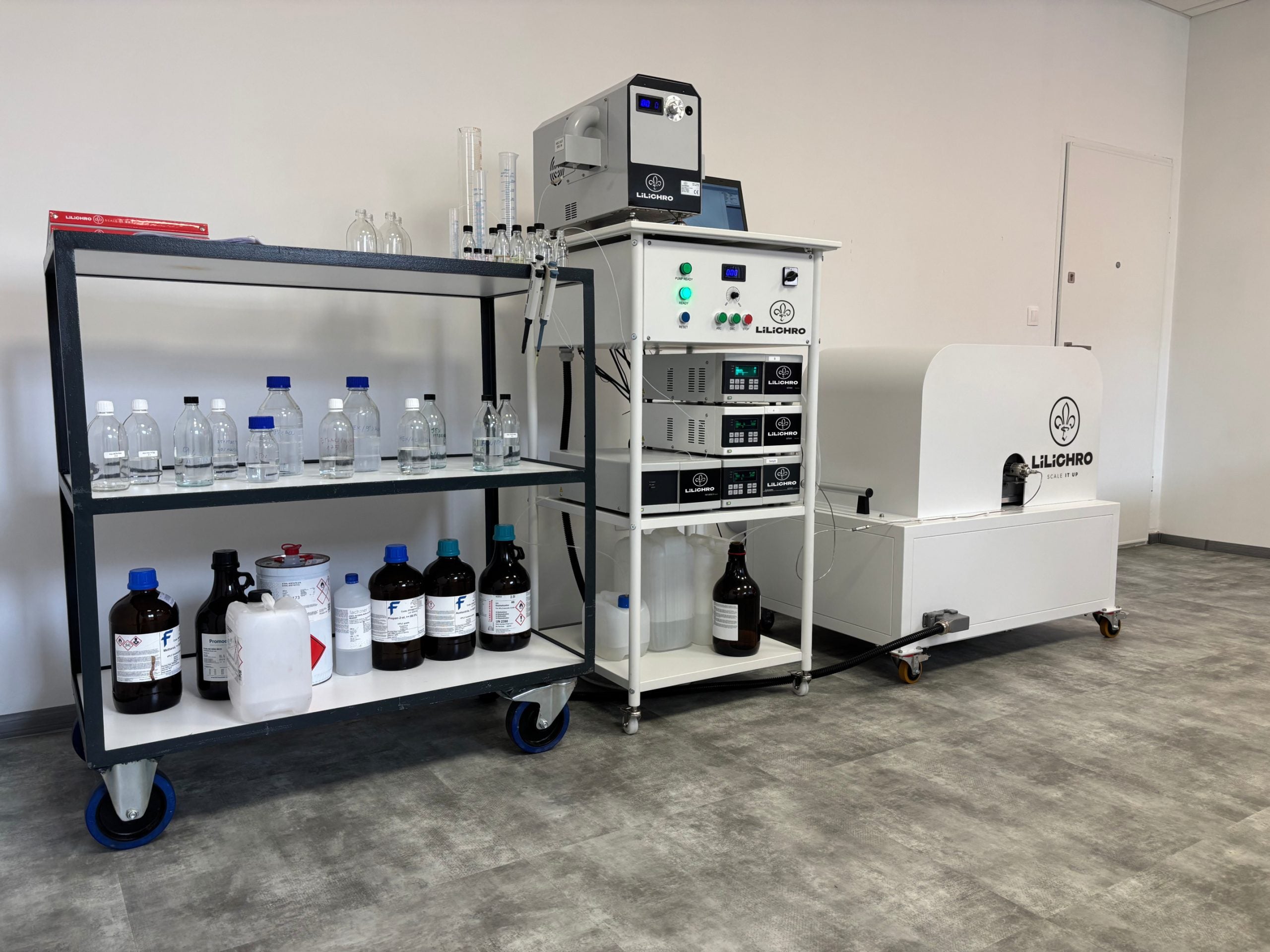
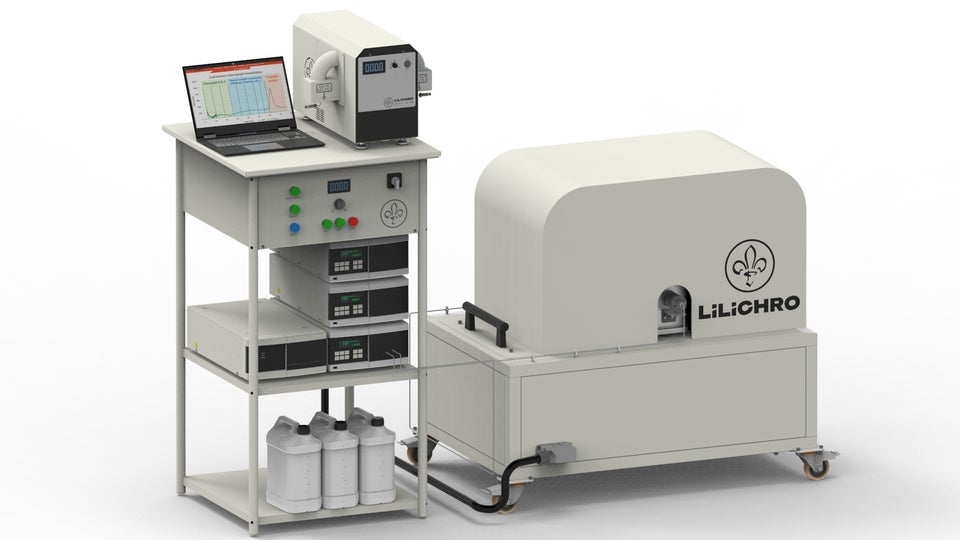
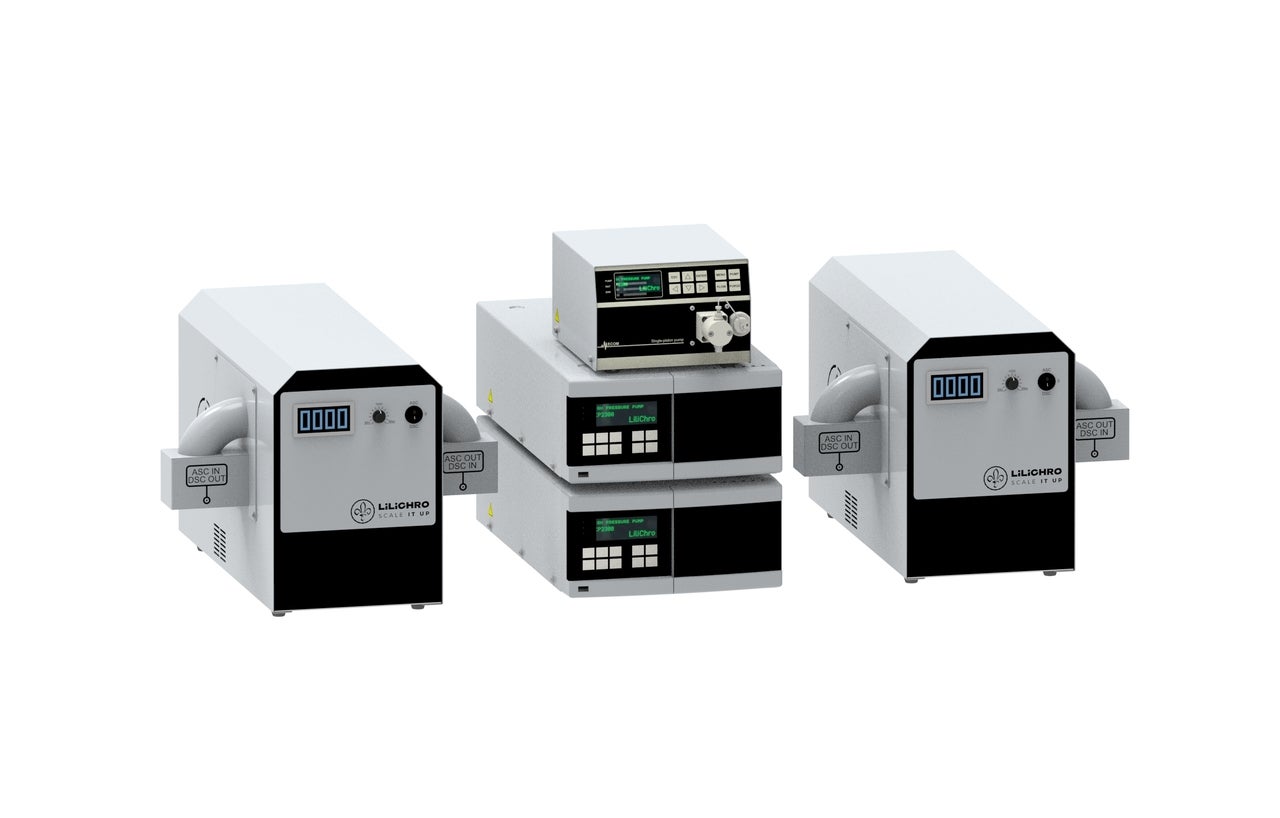
LiLiChro LLC is a European manufacturer of centrifugal partition chromatography (CPC) systems, delivering scalable liquid–liquid chromatography solutions for pharmaceutical, biotechnology, natural extract and cosmetics industries.
The company focuses on purification challenges where conventional chromatography approaches reach practical limitations related to column cost, irreversible adsorption, scale-up complexity, or handling of complex feedstocks.
LiLiChro’s mission is not to replace existing technologies universally, but to provide a technically and economically viable alternative where traditional methods reach their boundaries.
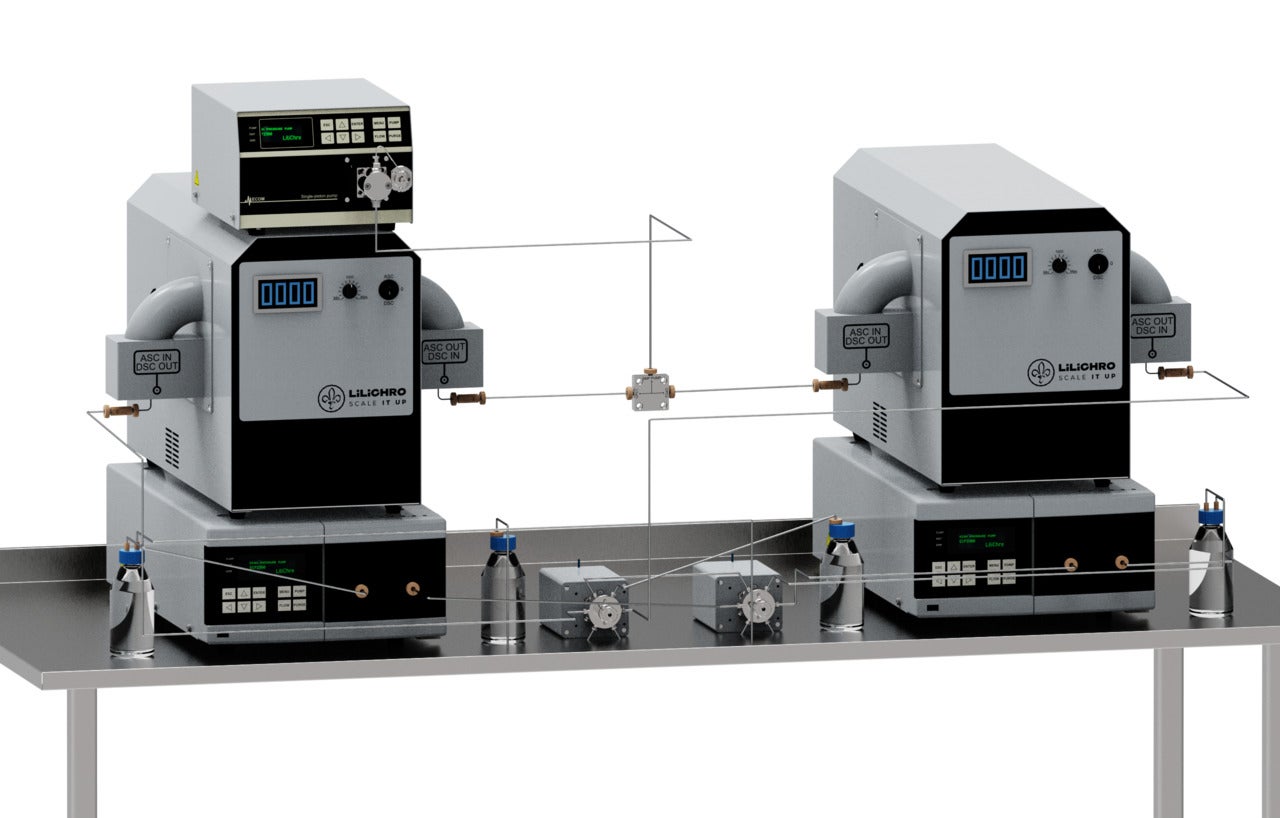
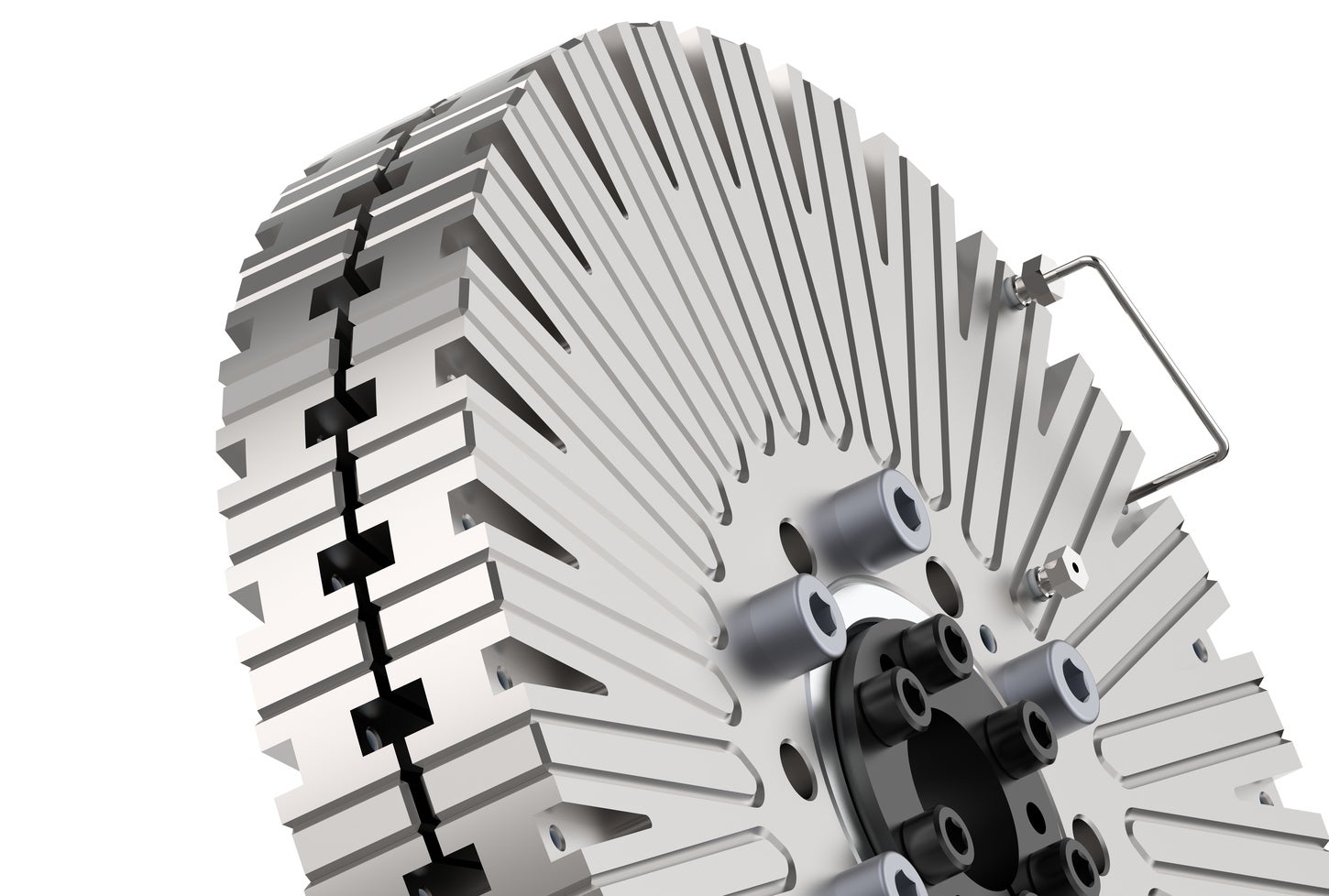
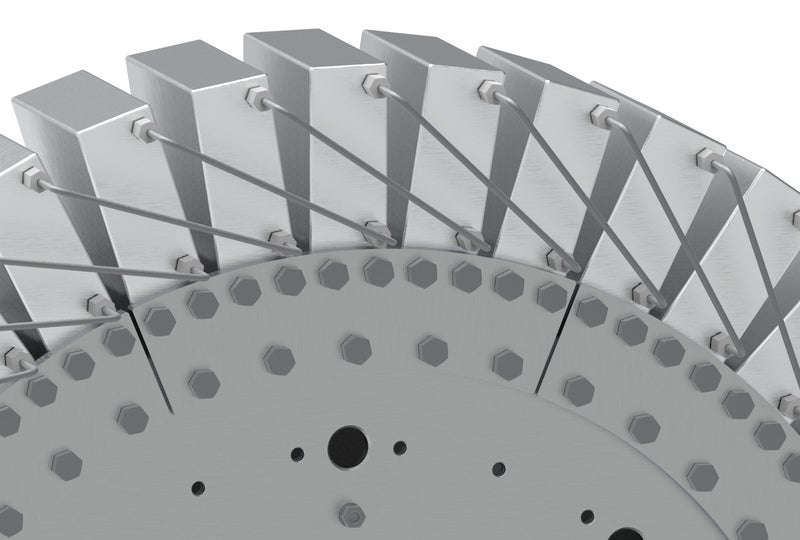
CPC is a form of liquid–liquid preparative chromatography that operates without a solid stationary phase. Instead, separation is achieved between two immiscible liquid phases, one of which is retained in a rotating system by centrifugal force.
This approach fundamentally changes several aspects of chromatographic purification.
Without a solid phase, there is no irreversible adsorption, no column degradation, and no dependency on packed media. As a result, CPC can offer advantages in:
At the same time, CPC is not intended as a universal replacement for all chromatographic workflows. Its relevance depends on the specific separation challenge, process constraints, and scalability requirements.
This raises a practical question for many development teams:
When does a solid-phase chromatography system cease to be optimal, and what alternatives are available at that point?
One of the key limitations in preparative and process chromatography is scale-up.
In many preparative chromatography systems, method transfer from laboratory to production scale requires iterative re-validation due to changes in column packing, pressure, and flow dynamics.
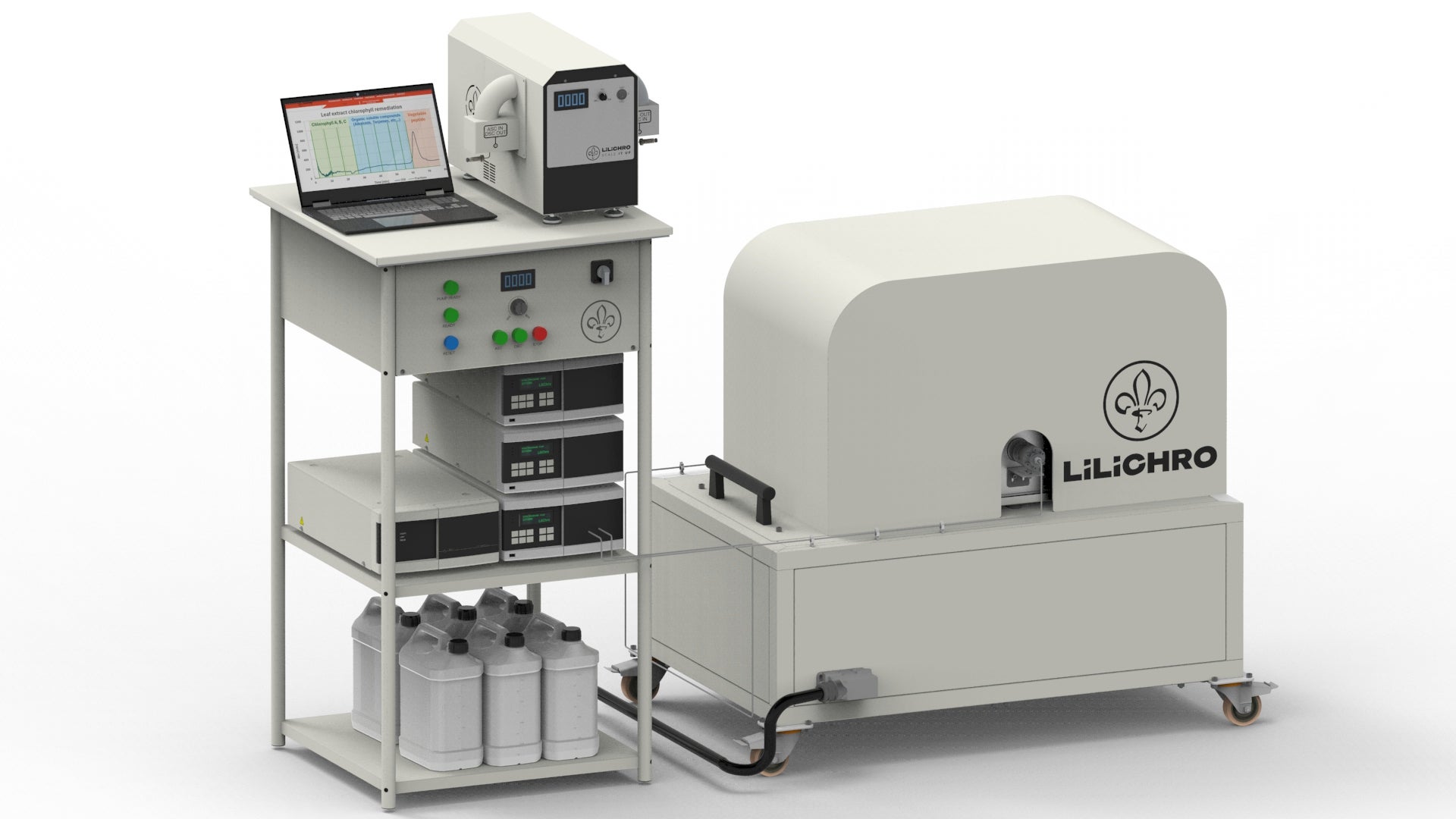
LiLiChro CPC systems are designed as scalable chromatography systems, based on linear scale-up principles. Methods developed on laboratory-scale instruments can be transferred to pilot and industrial systems using defined volumetric relationships.
This reduces the need for repeated optimisation cycles and allows process development to proceed with greater predictability.
LiLiChro CPC technology is particularly relevant in:
In these environments, the choice of purification method directly impacts yield, reproducibility, and process economics.
CPC introduces a different selectivity mechanism compared to solid-phase systems, which can lead to improved separations in specific cases.
However, the critical question remains application-specific whether a liquid–liquid system provides a better separation environment for your molecule than a solid-phase system.
Modern purification challenges increasingly involve complex feedstocks, crude extracts, fermentation broths, or impurity-rich reaction mixtures.
In traditional systems, these often require extensive pre-treatment to avoid fouling, clogging, or pressure-related issues.
Because CPC does not rely on a packed column, it is inherently less sensitive to these effects. This can reduce the need for upstream preparation steps and improve overall process robustness.
LiLiChro is built on decades of experience in liquid–liquid chromatography and CPC development.
The company was founded by László Frici Németh, a recognised expert in the field and a key contributor to the industrial advancement of centrifugal partition chromatography. His work includes multiple innovations and patents related to CPC technology and its practical implementation in industrial environments.
Unlike purely academic developments, LiLiChro’s approach is strongly application-driven, focusing on real-world process challenges in pharmaceutical and chemical manufacturing.
This combination of engineering, process understanding, and practical experience defines the company’s position in the chromatography landscape.
Not every purification problem is a good fit for CPC. LiLiChro works with a feasibility-first approach, evaluating each application based on the specific compound, separation challenge, and process constraints.
This includes:
The goal is to determine whether CPC represents a meaningful improvement over existing methods.
If you are working with:
It may be worth exploring whether liquid–liquid chromatography offers a different solution space.
LiLiChro provides initial screening and consultation to evaluate the applicability of CPC in your specific process.
Submit your process details to determine whether CPC is the right approach for your purification challenge.
This study investigated the purification of epigallocatechin gallate (EGCG), an important green-tea catechin used in dietary supplements.
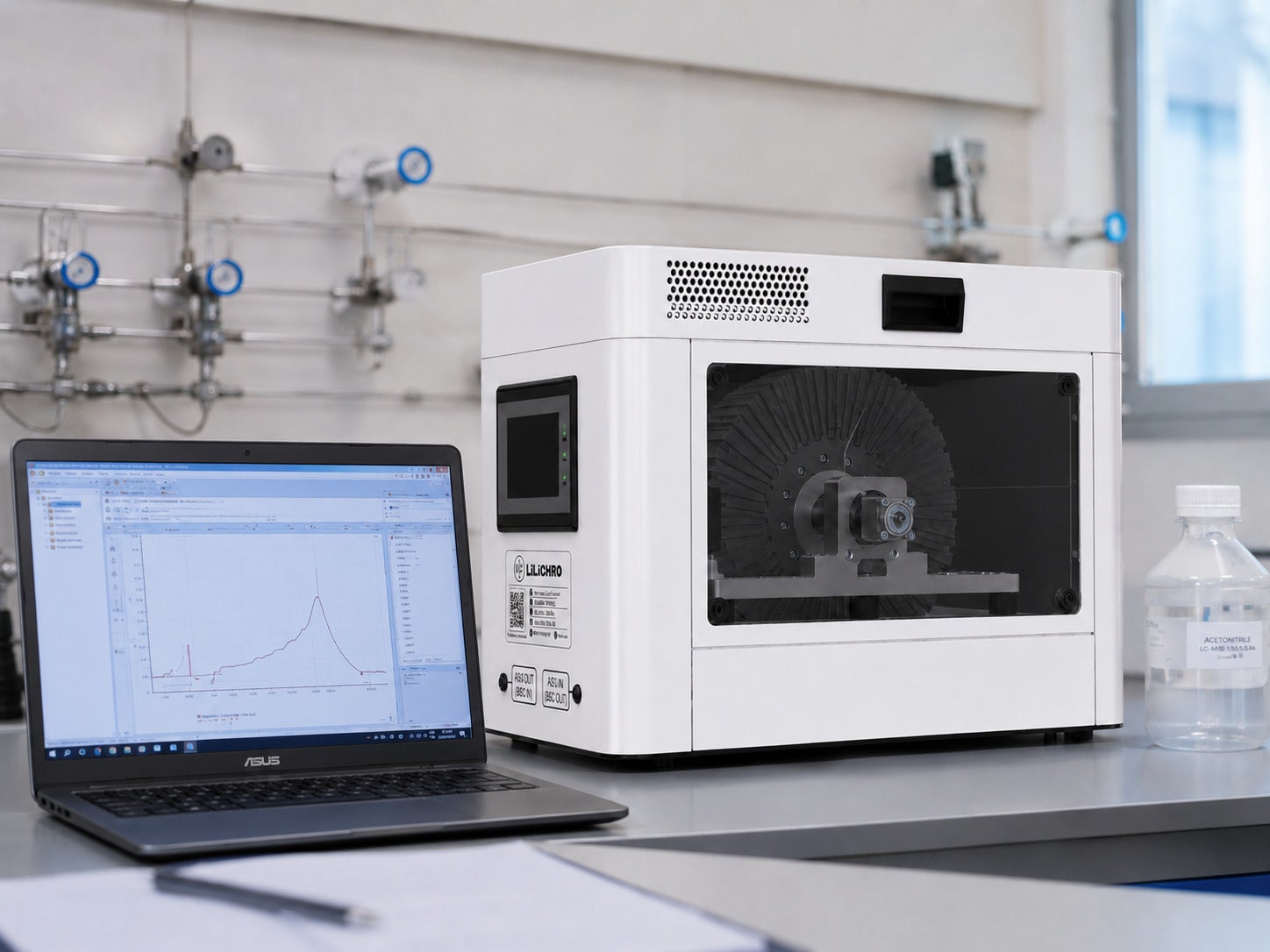
The miniLiLi is a chromatography laboratory instrument designed for analytical applications, method development and experimental purposes. As it is optimised for laboratory use, it is also optimised for low solvent consumption.
This application focused on rapidly enriching a target flavouring compound from a complex biological extract. The starting extract contained approximately 10% of the target compound.
Crude aqueous vegetable leaf extracts contain proteins alongside chlorophyll, alkaloids, terpenes, and other organic compounds. The purpose of this study was to selectively remove these contaminants while retaining the water-soluble protein fraction.
The objective of this study was to pre-purify crude cyclosporine with an initial HPLC purity of 81.4%. The separation was performed on a 35ml miniLiLi column in ascending mode with extrusion.
CPC technology was used to extract high-value natural psoralen from a low-cast botanical by-product.
This study examined the purification of ALX-24, a hydrophobic ionisable lipid, following synthesis. The starting material had a QNMR content of approximately 88%.
LiLiChro LLc. builds liquid–liquid chromatography systems for real-world separation work. From lab-scale analytics to industrial production, our equipment is designed to handle complex mixtures, reduce process friction, and scale efficiently. Backed by decades of experience, we focus on making purification practical, predictable, and economically viable.
The loading capacity of the 35ml miniLiLi column was evaluated using mixtures of methyl and ethyl paraben at three loading levels: 10mg, 25mg, and 100mg. The target purity for both compounds was above 99%.
Explore detailed technical specifications for LiLiChro’s CPC systems, from laboratory-scale method development to industrial purification.
Most chromatographers first meet liquid chromatography through HPLC. A liquid mobile phase, a packed column, pressure, detectors, peaks, fractions, method development, troubleshooting. Familiar territory. Liquid-liquid chromatography, or LLC, keeps the chromatographic idea but changes one important part: the stationary phase is also a liquid.
For many chromatographers, centrifugal partition chromatography feels strange at first.
Preparative chromatography is not automatically the next step after synthesis or extraction. It is one of several purification options alongside crystallisation, precipitation, extraction, distillation and membrane-based methods.
Selecting a preparative chromatography method should begin with the feed, not the instrument.
A C18 method may deliver excellent separation on an analytical HPLC—and still become impractical when production volume increases.
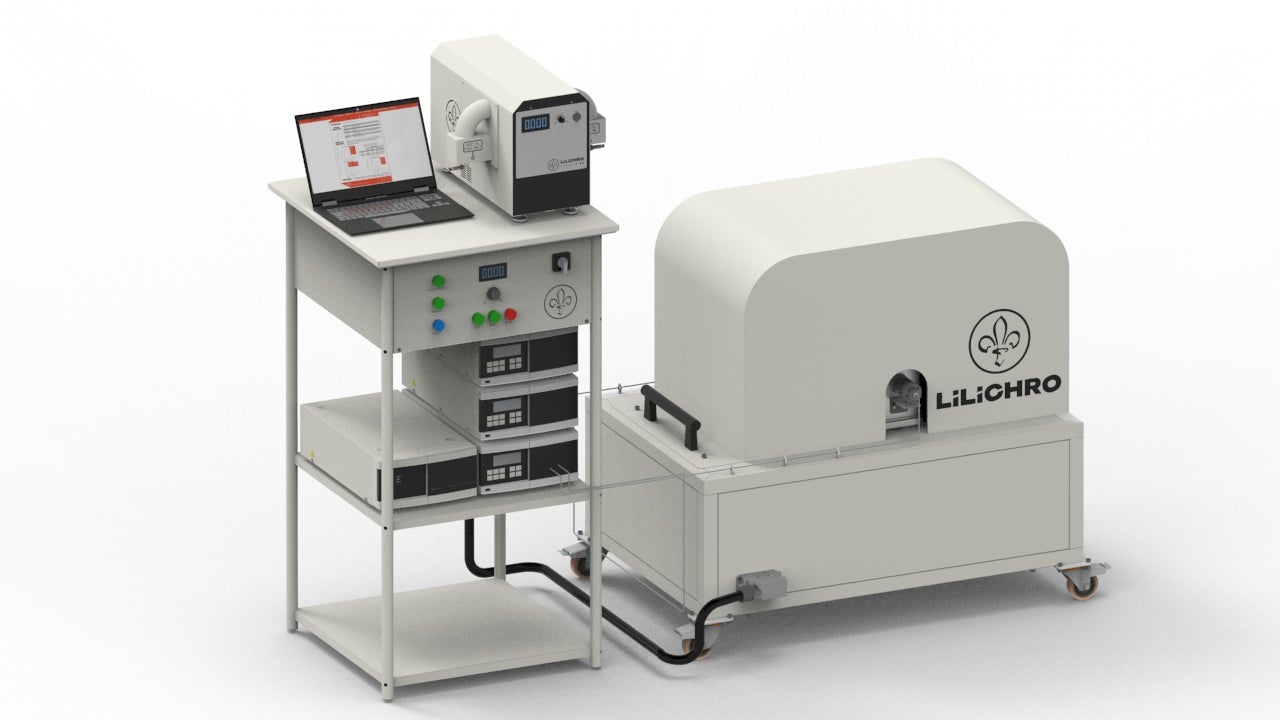
maxiLiLi is LiLiChro’s mobile centrifugal partition chromatography (CPC) system for pilot production, mid-volume manufacturing and kilogram-scale purification.
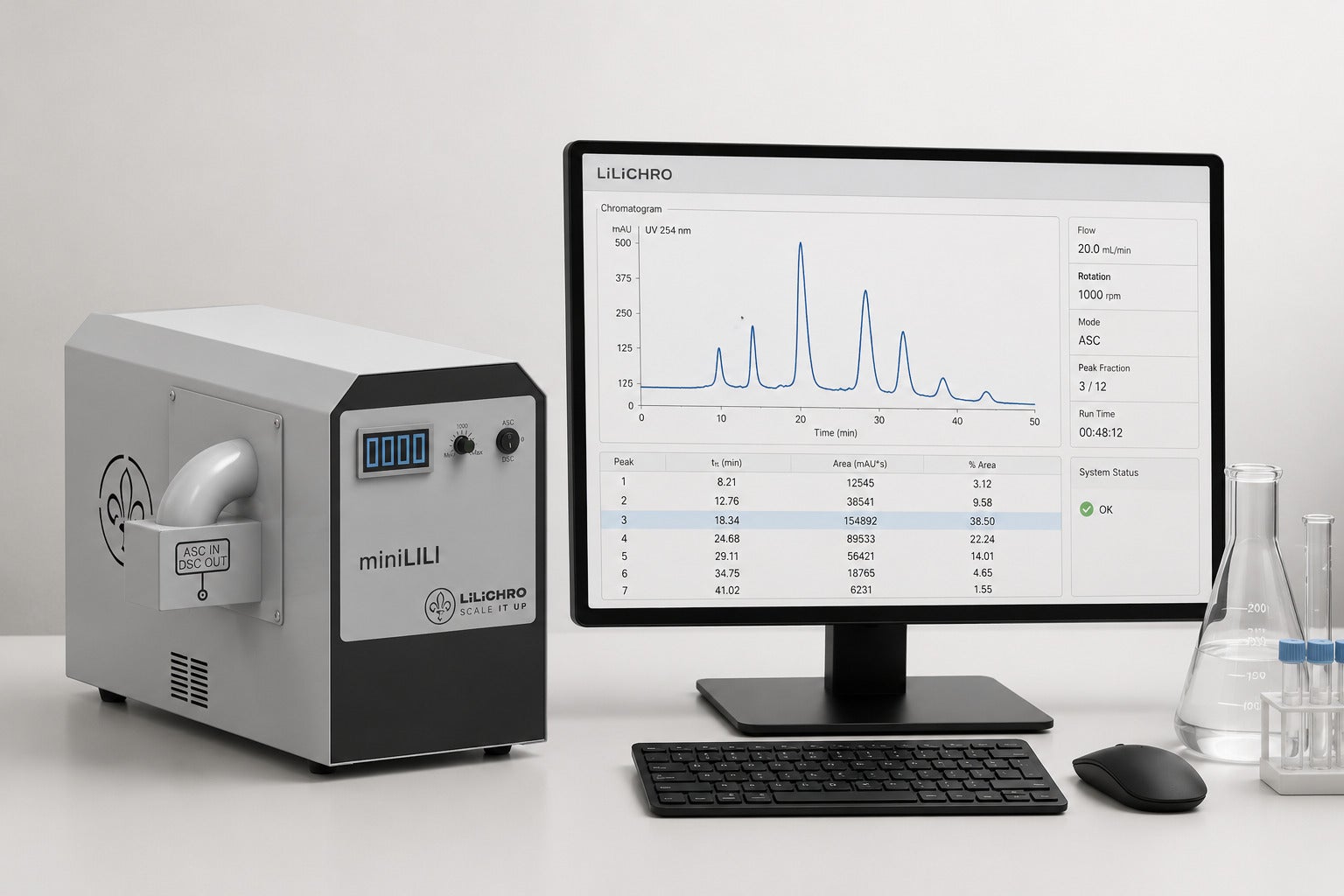
midiLiLi is LiLiChro’s compact centrifugal partition chromatography (CPC) instrument for gram-scale purification, standards preparation and preparative method development.
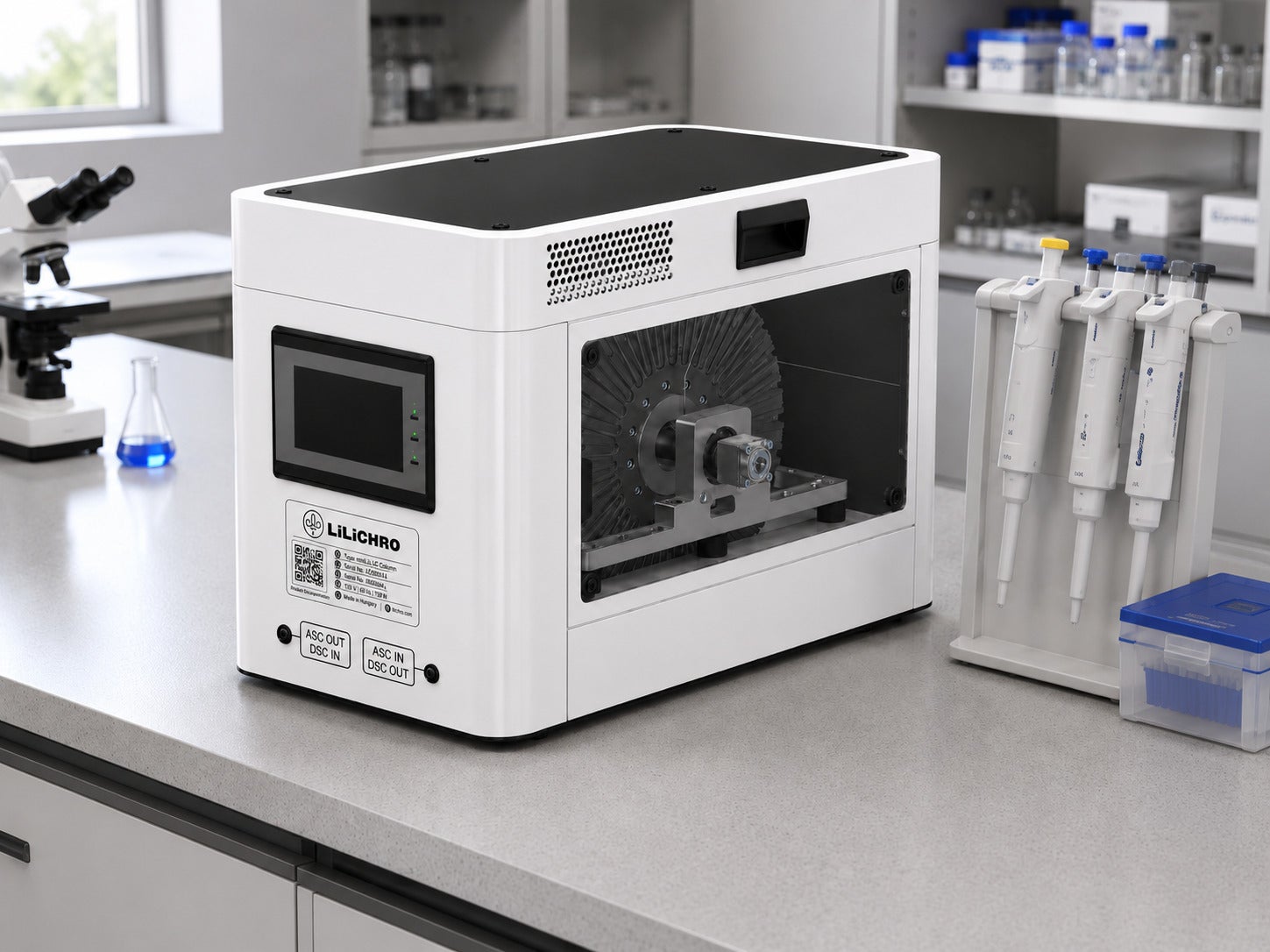
miniLiLi is LiLiChro’s compact centrifugal partition chromatography (CPC) instrument for laboratory-scale method development, micro-preparative purification and early-stage feasibility studies.
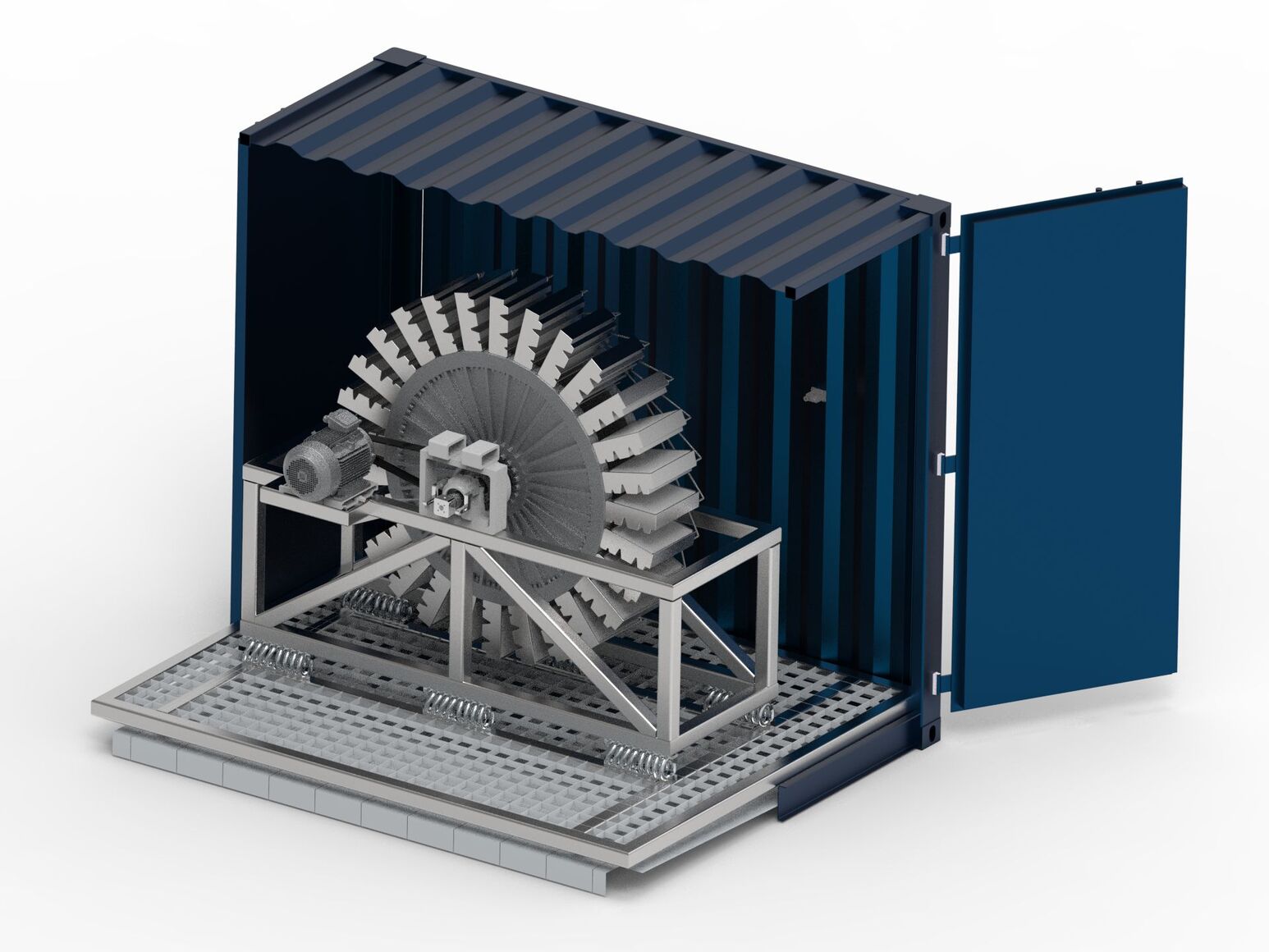
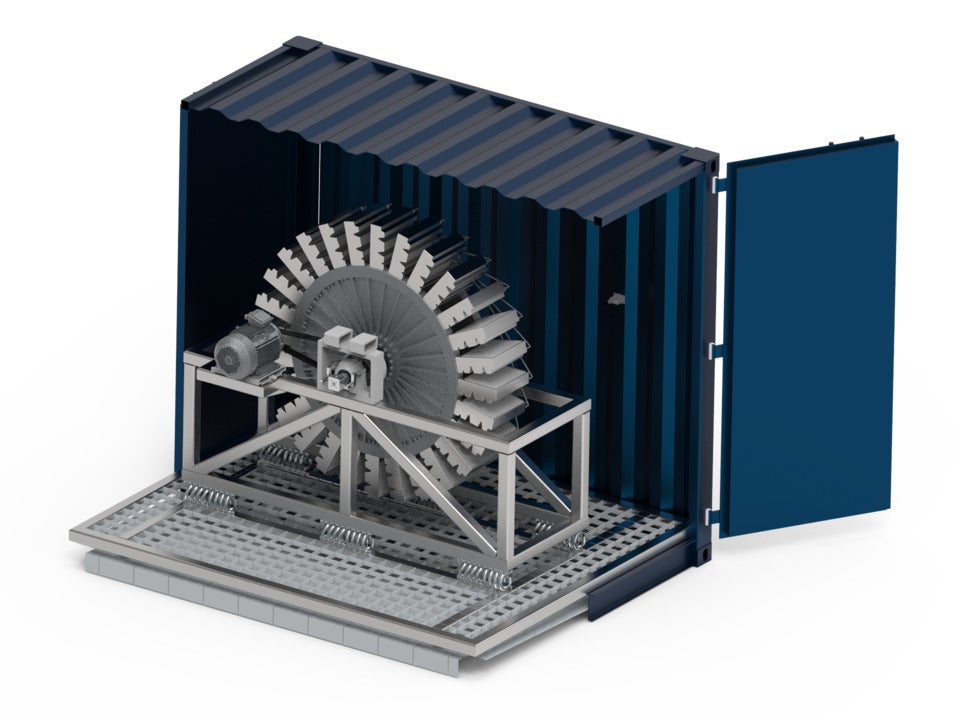
prepLiLi is LiLiChro’s industrial centrifugal partition chromatography (CPC) system for continuous, high-volume purification. Designed for direct integration into production environments, it enables companies to transfer validated liquid–liquid separation methods from laboratory development to full industrial manufacturing.