
miniLiLi: Laboratory-Scale CPC Method Development with a Direct Route to Scale-Up
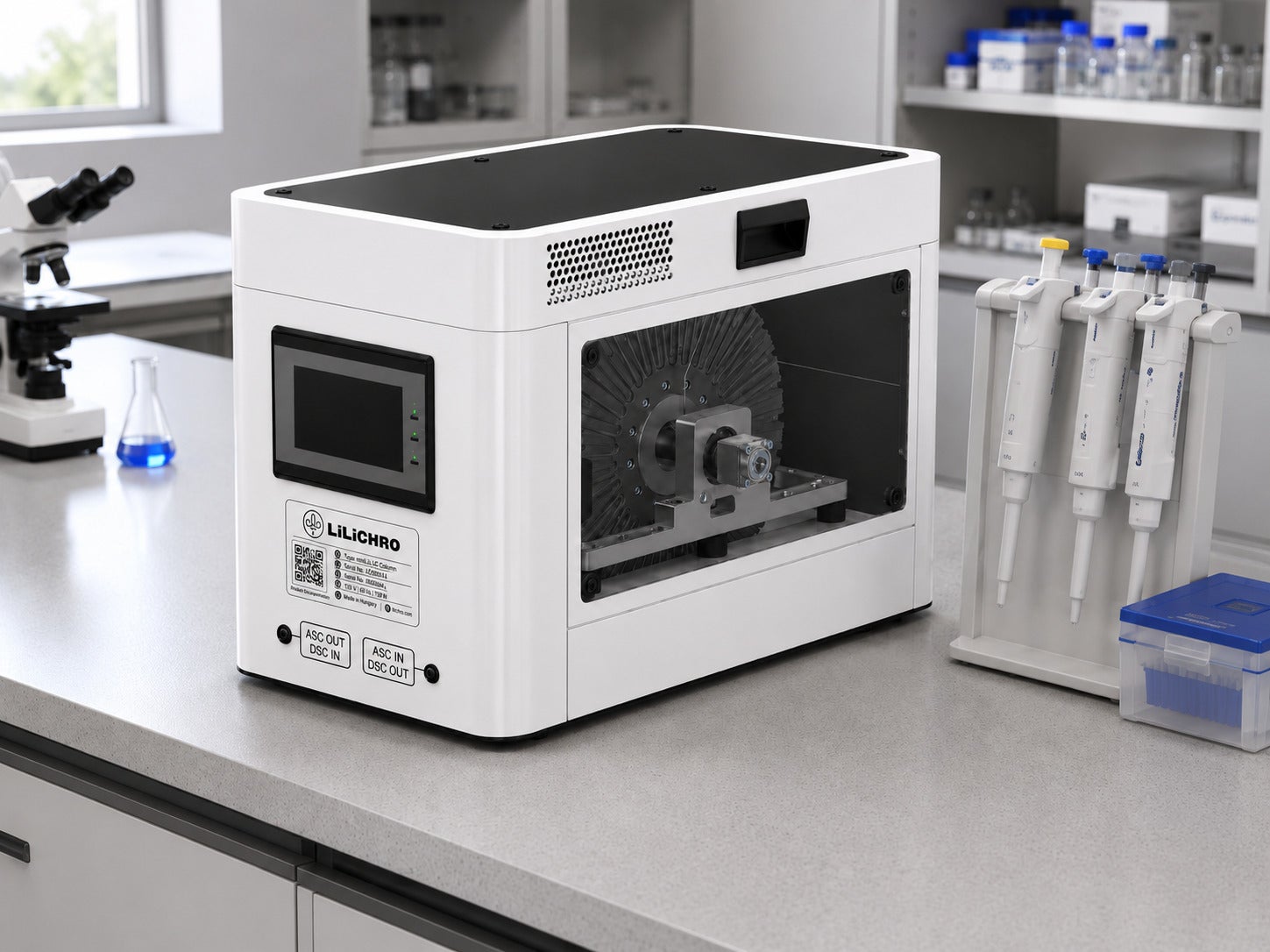
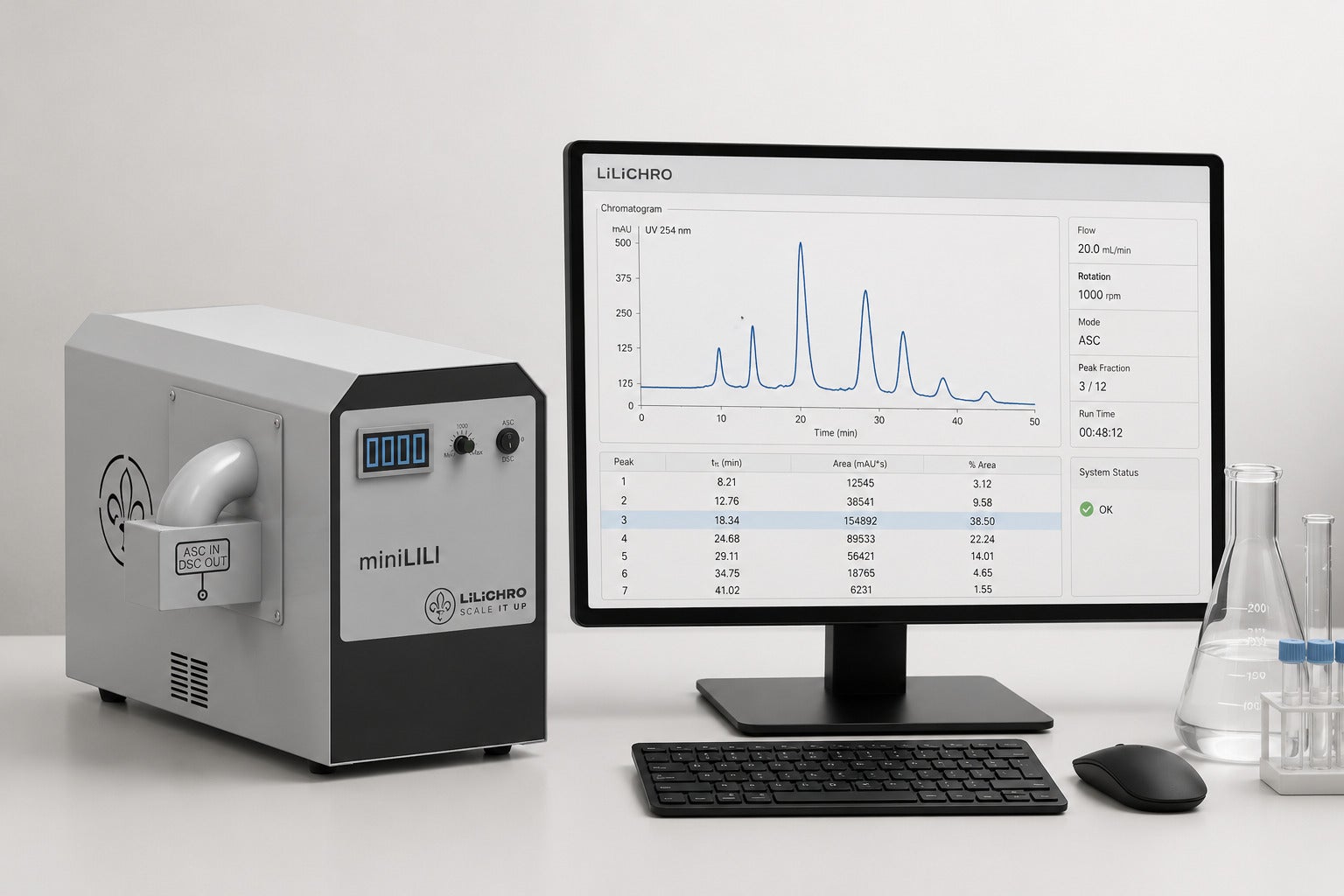
miniLiLi is LiLiChro’s compact centrifugal partition chromatography (CPC) instrument for laboratory-scale method development, micro-preparative purification and early-stage feasibility studies. It enables scientists to evaluate liquid–liquid chromatography using small quantities of sample and solvent before committing material and resources to a larger purification process.

Unlike conventional preparative chromatography, CPC does not use a packed solid stationary phase. Instead, one liquid phase is retained inside the rotating column while the second liquid phase flows through it. Compounds are separated according to their different partition behaviour between the two immiscible phases. Eliminating silica or another solid packing material reduces the risk of irreversible adsorption and makes the technology particularly relevant for valuable, sensitive, crude or complex samples.
miniLiLi is designed to answer an essential development question early: can the target compound be separated effectively using CPC?
Its 0.034L column volume supports sample loads from 1 to 1,000 mg, making it suitable for projects where only a limited amount of material is available. Solvent consumption ranges from 30ml/h to 600ml/h, with an operating flow-rate range of 0.5ml/min–10ml/min. The helical rotor design provides more than 80%–90% stationary-phase retention, while the instrument supports operating pressures up to 10MPa (1,450psi).
These capabilities allow researchers to screen biphasic solvent systems, assess selectivity, optimise flow rate and loading, collect purified fractions and generate the practical data required for process evaluation. The system can support analytical investigations, method development, micro-preparations, experimental purification and preliminary cost estimation based on run time, loading and material consumption.
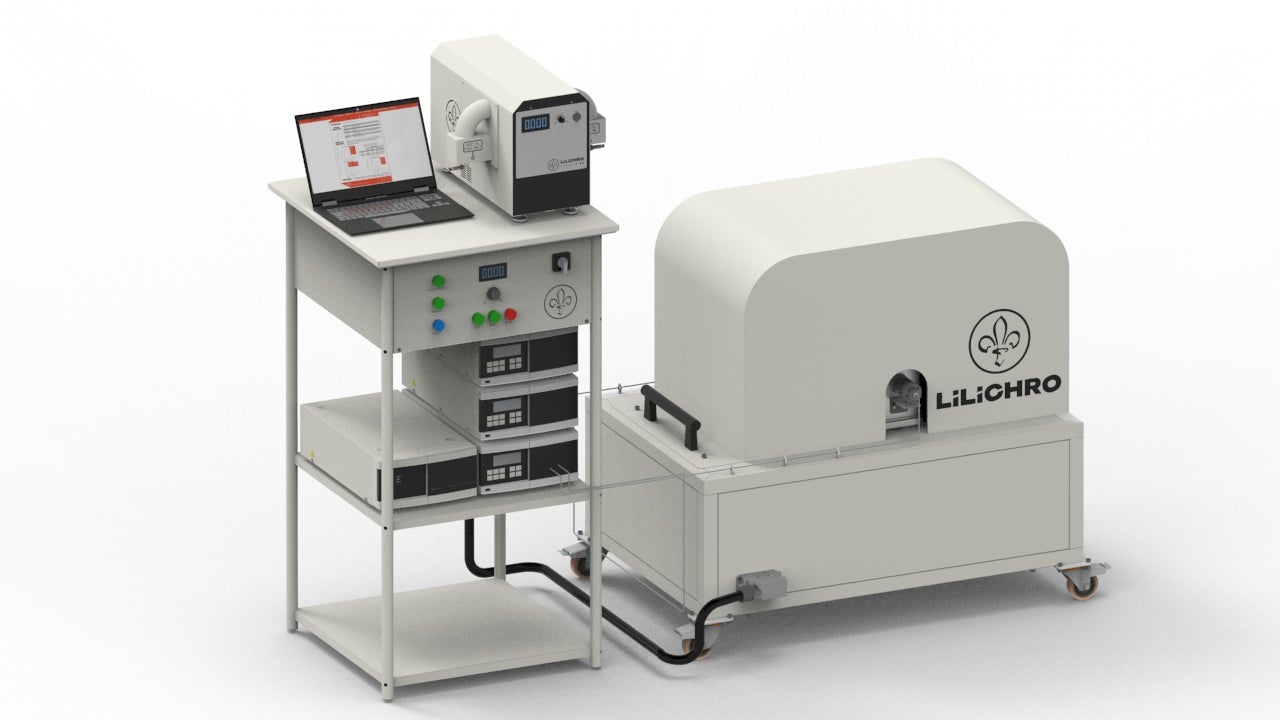
miniLiLi can be integrated with standard chromatography equipment, including suitable HPLC pumps, an injector and an optional detector. Laboratories can therefore begin exploring CPC while using parts of their existing chromatography infrastructure. Its compact benchtop design also makes the system suitable for pharmaceutical, biotechnology, natural-extract, cosmetic and fine-chemical R&D environments.
The instrument is particularly valuable when conventional packed-column methods struggle with irreversible adsorption, rapid column fouling, low recovery or difficult crude matrices. It can also provide an alternative development route for closely related compounds, including isomers and other challenging impurity profiles, when an appropriate biphasic solvent system provides the required selectivity.
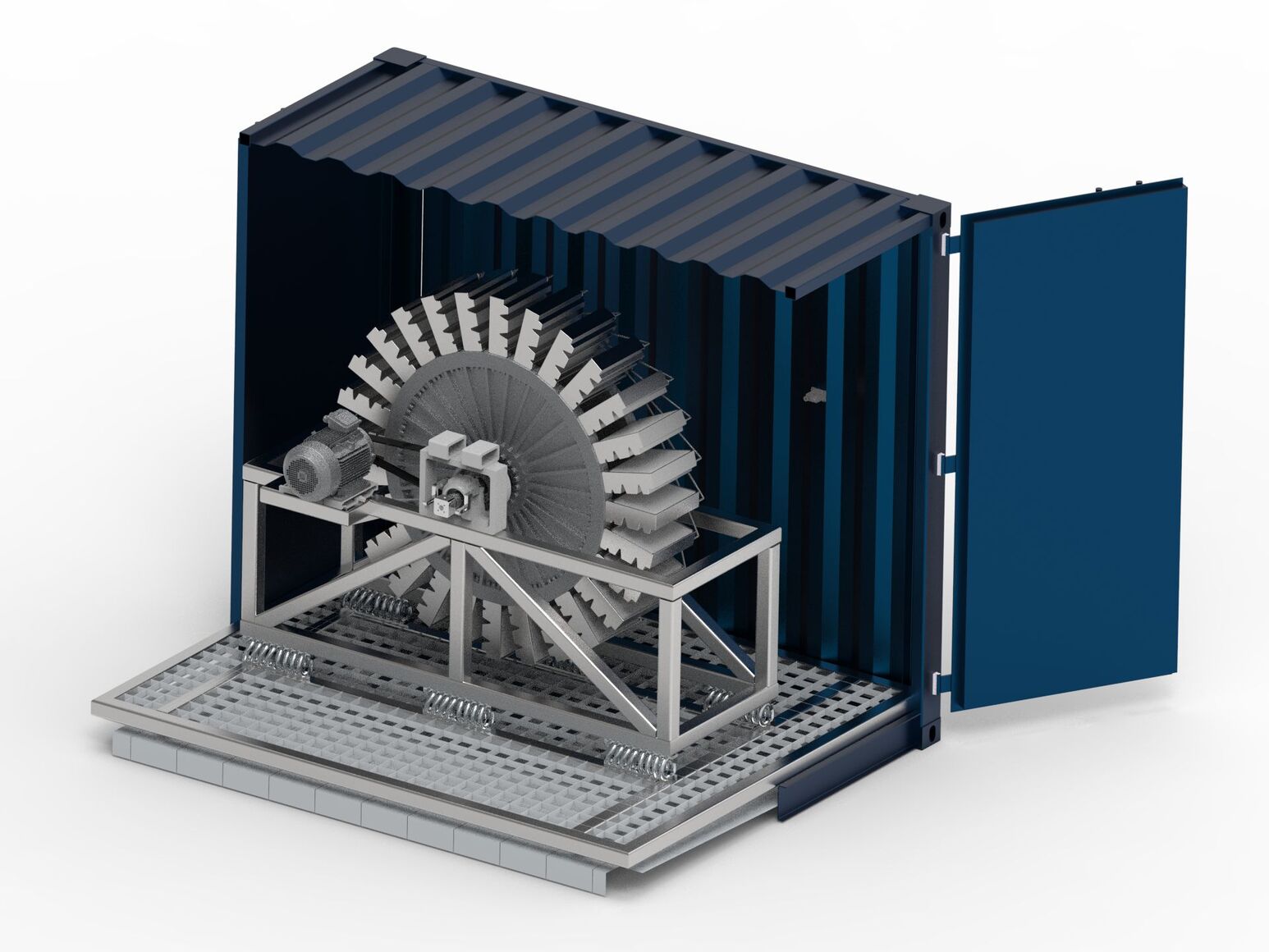
Most importantly, miniLiLi is not an isolated laboratory instrument. It is the starting point of LiLiChro’s scalable CPC platform. Methods developed on miniLiLi can be transferred to midiLiLi, maxiLiLi and prepLiLi using the same solvent system and liquid–liquid partition principles. This enables teams to develop the chemistry at small scale and move towards larger preparative or production volumes without rebuilding the separation concept from the beginning.
For laboratories considering CPC, miniLiLi offers a material-efficient and scalable way to determine whether the technology fits a specific purification challenge—and to establish the foundation for subsequent process development and implementation.
Check miniLiLi’s column loading test: https://lilichro.com/app-note/minilili-column-loading-test-using-methyl-and-ethyl-paraben/