

Beyond Endotoxin Testing: Creative Biolabs Addresses Endotoxin Control Challenges
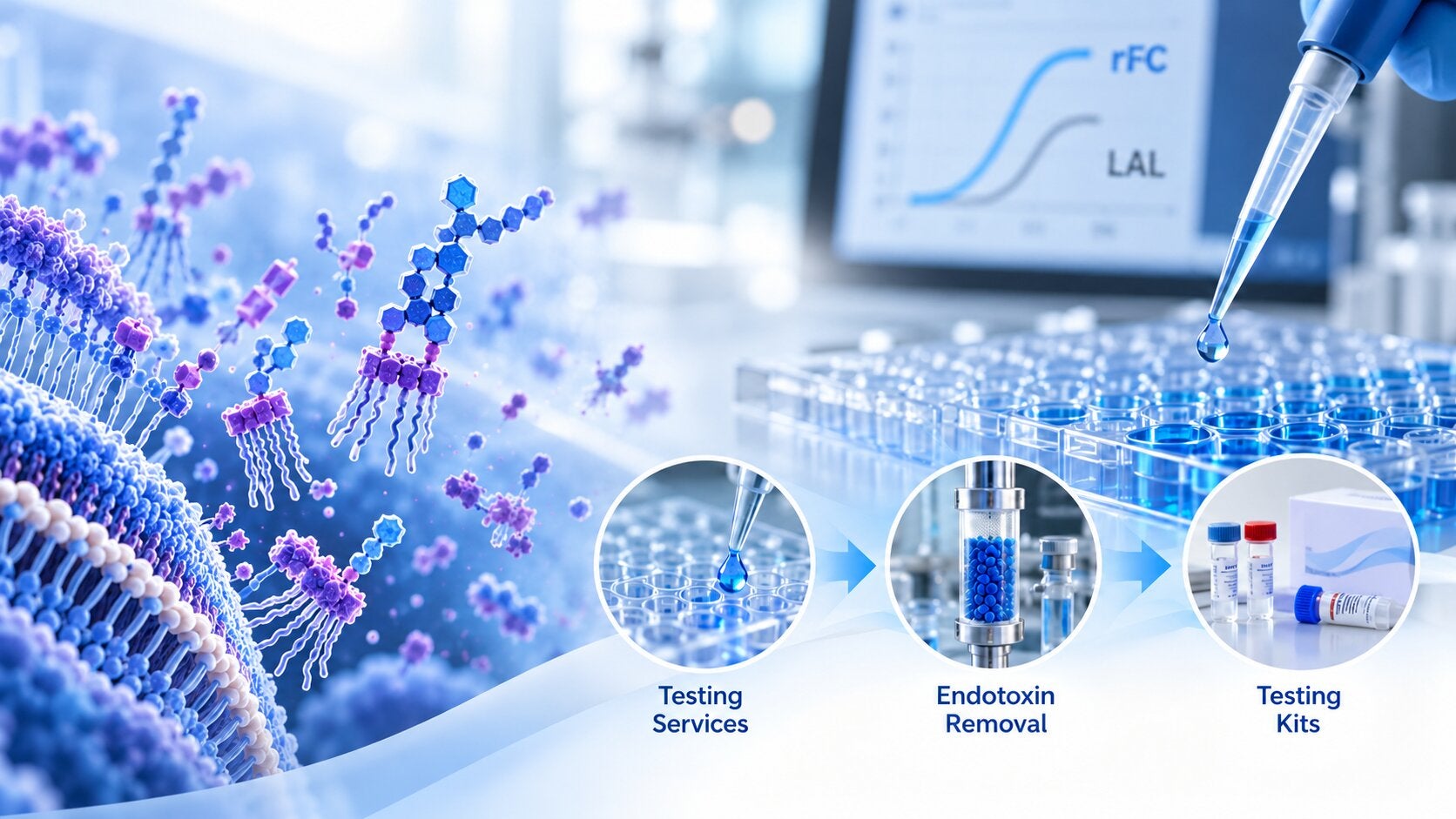
Matrix interference, method suitability, and the complexity of biologics are driving more careful approaches to endotoxin testing and control.
Reliable bacterial endotoxin testing requires more than a sensitive assay. Matrix interference, limited access to specialised instruments and qualified testing laboratories, and the difficulty of removing endotoxins without damaging biological products can all complicate development. Creative Biolabs brings together endotoxin testing services, removal solutions, and laboratory kits to help research and pharmaceutical teams address these connected challenges.
Why endotoxin testing remains technically difficult
A product can produce a passing endotoxin result without that result fully resolving questions about method suitability. Bacterial endotoxins, largely lipopolysaccharides from Gram-negative bacteria, can persist after microorganisms have been inactivated. For injectable pharmaceuticals and many biologics, their detection is a critical safety concern.
The first barrier is the sample itself. Proteins, buffers, surfactants, salts, and other formulation components may inhibit or enhance endotoxin assay reactions. Dilution can reduce interference, but excessive dilution can leave a method unable to detect endotoxin at the product-specific acceptance limit. Analysts must therefore balance sensitivity with the maximum valid dilution (MVD) and demonstrate suitable recovery under test conditions.
A second challenge is access to the right tools. Gel-clot, kinetic chromogenic, kinetic turbidimetric, and recombinant reagent approaches are not interchangeable in every sample matrix. Some laboratories have limited instrument capacity, validated methods, suitable reagents, or experience troubleshooting interference. Outsourcing may be necessary when internal testing capability does not match the complexity of a development programme; these constraints vary by laboratory and should not be treated as an industry-wide shortage.
Finally, detection does not remove the contaminant. Endotoxins can aggregate and associate with proteins or purification surfaces, making downstream clearance particularly difficult for sensitive biological materials. This creates an operational gap between finding contamination and reducing it while maintaining product recovery.
Creative Biolabs connects testing, tools, and removal
To address these challenges, Creative Biolabs offers endotoxin testing services that support conventional LAL and recombinant testing approaches. Depending on the sample and project needs, the analytical strategy can consider inhibition/enhancement testing, appropriate dilution, assay sensitivity, and method suitability. The emphasis is on interpretable results rather than treating a numerical readout as sufficient by itself.
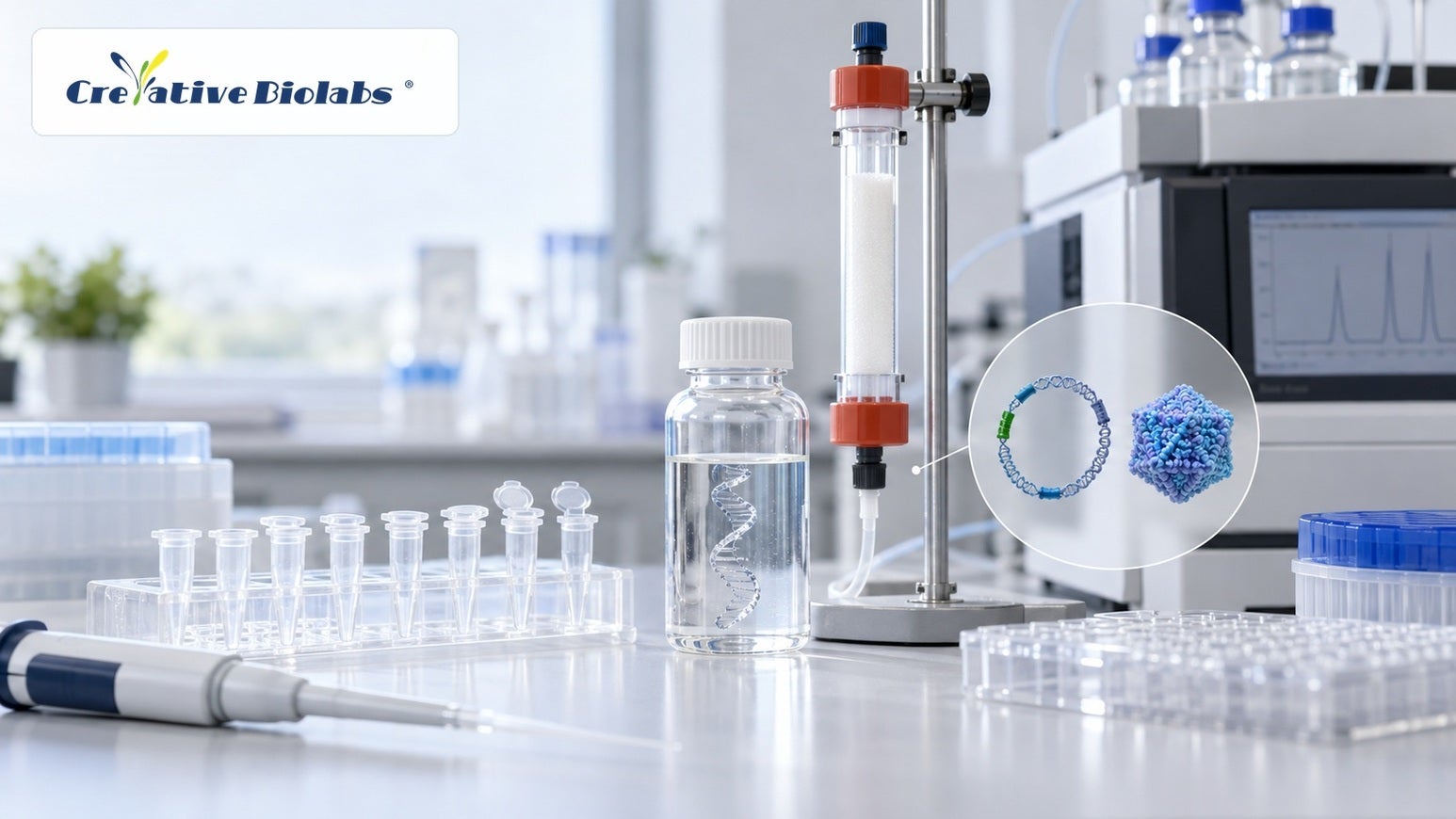
Where contamination is identified, its endotoxin removal services support evaluation of product-compatible purification options. Endotoxin reduction may involve affinity-based separation, ion exchange, adsorption, ultrafiltration, or phase-separation methods, depending on the product and process. Each approach involves trade-offs, and an appropriate choice depends on endotoxin load, the target molecule’s characteristics, process compatibility, and the need to maintain activity and yield. Removal should be followed by a suitable analytical check; no single technique is universally effective.
For laboratories building internal capacity, the company also supplies endotoxin testing kits spanning LAL-based and recombinant formats. Having access to different assay principles can help teams match workflows to their sample types and available instrumentation, although each method still requires product-specific suitability assessment.
Technical highlights: What matters in method selection
Three considerations stand out. First, specificity: recombinant Factor C (rFC) responds to endotoxin without the Factor G pathway associated with certain beta-glucan responses in conventional lysate systems. Second, matrix performance: spike recovery and inhibition/enhancement studies are needed to establish whether an assay works in the actual product preparation. Third, process integration: testing before and after a purification step can inform whether endotoxin reduction is occurring without unacceptable losses of the target material.
The regulatory context is also changing. USP General Chapter <86>, Bacterial Endotoxins Test Using Recombinant Reagents, became official in May 2025. It introduces additional testing approaches using recombinant Factor C (rFC) and recombinant cascade reagents (rCR). Unless otherwise specified in an applicable monograph, these procedures are treated as alternative methods and require appropriate verification or validation of suitability for the intended product and use. Newer reagents expand choices; they do not eliminate the need for sound experimental design.
Q&A: Practical questions for pharmaceutical teams
Q: Can a negative endotoxin result alone establish that a product is safe?
A: No. It should be interpreted alongside demonstrated assay suitability, the product-specific endotoxin limit, and the broader manufacturing and quality-control strategy. Endotoxin testing is not a substitute for sterility testing.
Q: When should a laboratory consider recombinant testing?
A: When specificity, supply-chain considerations, or a non-animal-derived reagent strategy make it attractive, provided the method can be shown to perform appropriately for the product matrix and relevant requirements.
Q: Should testing or endotoxin removal come first?
A: Testing helps characterise the problem; removal is considered when contamination must be reduced. A practical workflow may include baseline measurement, a product-compatible removal step, and subsequent verification.
About Creative Biolabs
Creative Biolabs provides biotechnology research services and laboratory solutions supporting pharmaceutical and biologics development. Its endotoxin solutions portfolio includes analytical testing, contamination removal, and detection kits intended to help researchers approach endotoxin control across different stages of research and development.
Website: Creative Biolabs Endotoxin Solutions