
Therapeutic Glycoprotein Development and Glycoengineering
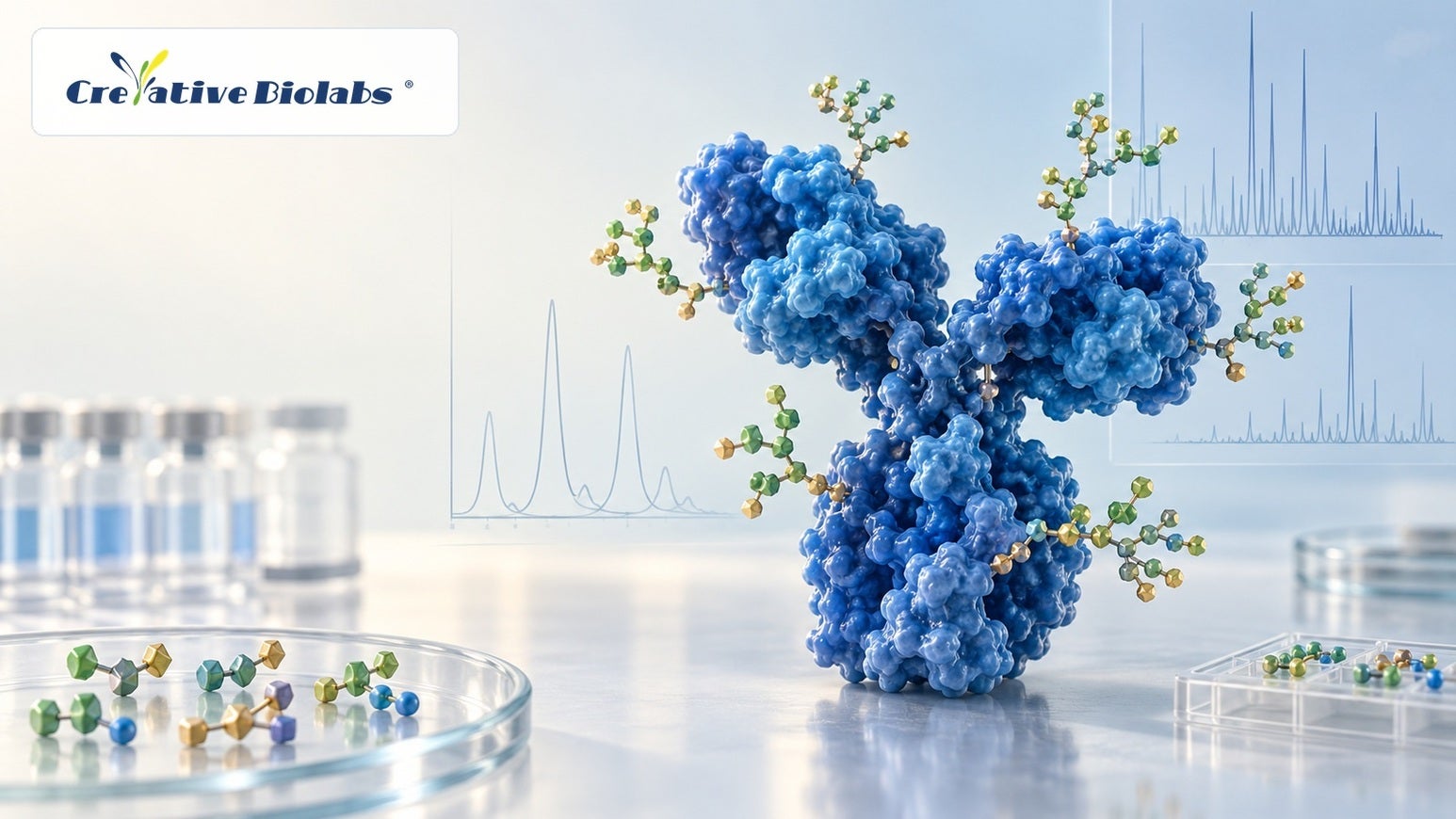
Glycosylation can influence the folding, stability, solubility, receptor interactions, serum persistence and immune effector functions of a therapeutic protein. It also introduces structural heterogeneity that must be understood when comparing expression systems, production conditions or candidate molecules. Creative Biolabs provides glycoprotein development, glycan analysis and glycoengineering services for antibodies, recombinant proteins, enzymes, vaccine antigens and other biologics.

Projects are designed around the molecule’s intended function and the specific glycosylation attributes that need to be measured or modified.
Glycoprotein expression and production
The host cell influences both protein production and the glycans attached to the final molecule. Creative Biolabs supports expression in mammalian, microbial and other suitable systems, with platform selection based on protein complexity, required post-translational modifications and study scale.
Development work may include construct design, expression screening, culture optimisation, purification and assessment of product quality. Purified glycoproteins can be evaluated for identity, purity, aggregation, molecular integrity, binding and biological activity. Where several expression systems or clones are under consideration, analytical comparison can help identify differences in glycosylation and functional performance.
Glycan and glycosylation analysis
Because glycans are not encoded directly by the genetic sequence, their structures depend on cellular processing and production conditions. A single glycoprotein may therefore contain several glycoforms, distributed across one or more glycosylation sites.
Creative Biolabs provides analytical services for released glycans, glycopeptides and intact glycoproteins. Depending on the question, studies may determine monosaccharide composition, glycan profiles, glycosylation sites, site occupancy and site-specific glycoform distribution.
Mass spectrometry, liquid chromatography, lectin-based methods and other complementary techniques can be selected according to the sample and the required level of structural detail. Orthogonal methods are useful when a single analytical approach cannot resolve all relevant forms or positional isomers.
Glycoengineering strategies
Glycoengineering can be used to modify the distribution of glycans on a therapeutic protein. The appropriate strategy depends on whether the objective is to alter a specific glycosylation site, reduce heterogeneity or shift the abundance of selected glycoforms.
Available approaches may include host-cell engineering, modulation of glycosyltransferase or glycosidase activity, optimisation of culture conditions and enzymatic or chemoenzymatic glycan remodelling after protein production.
For therapeutic antibodies, Fc glycosylation can affect interactions with Fc gamma receptors and complement components. Changes in fucosylation, galactosylation, sialylation or high-mannose content may alter selected functional or pharmacokinetic properties, but the effect must be confirmed for the individual molecule rather than inferred from glycan composition alone.
Functional assessment
Analytical differences become meaningful when they can be related to protein function. Engineered or naturally occurring glycoforms may be compared for target binding, receptor interaction, enzymatic activity, cell-based potency, Fc-mediated activity, stability or other molecule-specific endpoints.
The development process is therefore iterative: glycan analysis identifies structural differences, engineering generates defined variants, and functional testing determines whether those changes support the intended product profile.
Creative Biolabs also provides custom synthesis of glycans, glycopeptides, glycoproteins and glycoconjugates for standards, assay development and mechanistic research. These materials can be integrated with glycoprofiling, interaction studies and bioactivity testing.
Contact Creative Biolabs to discuss a therapeutic glycoprotein, glycan analysis or glycoengineering project.